
Sinful: Montana’s Guilty Pleasure
Growing up, James Stephens saw the negative impact that PTSD had on veterans. After risking their lives for their country, they were left with limited and often harmful coping tools.
A desire to offer veterans better treatment began brewing in Stephens’ mind.
Years later, while he was running Blue Marble, a biotechnology and ingredient innovation company that developed natural compounds through fermentation and biomimicry, and studying natural compounds, Stephens became deeply interested in non-addictive pathways for stress and trauma support. That work led him directly to cannabinoids.
“I saw how cannabis and cannabinoids such as THC, CBD, CBG and others offered a safer, more adaptive option for many people compared to alcohol,” he says. “And not just for veterans. I watched how it quietly improved sleep, reduced anxiety and stabilized people’s day-to-day lives.”
With his microbiology and chemistry background, Stephens decided to launch Sinful: a cannabis edibles brand.
A “Sinful” Way to Enjoy Cannabis
After about a year of experimentation and prototyping throughout 2020, the cannabis brand made its official debut in 2021. Originally launching in Montana’s medical market, once the state legalized adult-use, Sinful began B2B recreational sales in 2022.
“Sinful comes from a naming tradition inside our companies,” Stephens says. “Since 2010, we code-named major R&D projects after the seven deadly sins. It started playfully, but it evolved into something more: a way to reclaim the ideas society labels as ‘taboo’ or ‘wrong.’”
Cannabis has been stigmatized for decades, despite its benefits. Naming the brand “Sinful” was Stephens’ way of flipping that narrative — embracing what others consider “sinful” and reframing it as normal, acceptable and even beneficial.
And since Stephens had prior business experience through his other company, Blue Marble, getting Sinful up and running wasn’t difficult.
“That experience, science, regulation and commercialization became the foundation for Sinful,” he says.
Expanding Sinful’s Reach
Currently, Sinful products are available in over 300 dispensaries in Montana, as well as more than 90 dispensaries in New Mexico.
“We haven’t launched in Washington yet due to some licensing snags, but it remains a future target market when conditions align,” Stephens notes.
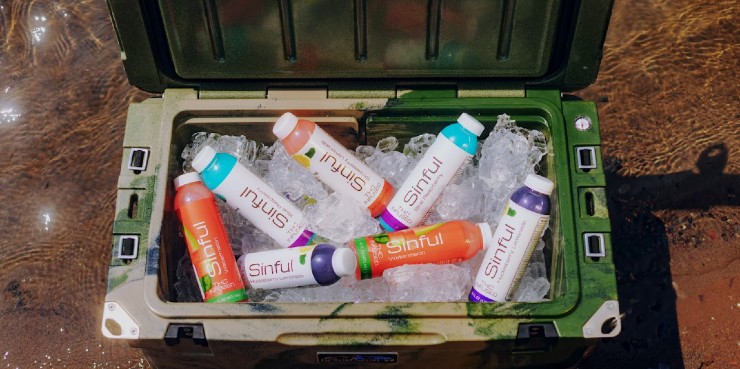
Consumers in these areas can choose from cartridges, gummies and infused beverages. And Stephens has plans for additional product rollouts in the pipeline.
“We’re constantly developing new products both inside and outside the cannabis category,” he says. “We have a deep passion for flavor innovation, experience design and novel functional ingredients.”
Within cannabis specifically, the brand has plans to expand into other form factors where they can add real value, such as outcome-driven formulations like sleep or recovery.
Stephens mentions that the brand also has plans to expand into additional states.
“Our goal is to have deals in place to enter five additional states by the end of 2026,” he says. “We’re selective about where we go next: the right regulatory environment, the right partners and the ability to maintain Sinful’s product quality and brand integrity.”
While the cannabis beverage category is still in its early stages nationally, Stephens hopes his brand is at the forefront of continued destigmatization and positive change.
“Our goal is to become a true multi-state player with products that feel familiar, consistent and emotionally engaging, no matter what market people encounter us in,” he says.
The post Sinful: Montana’s Guilty Pleasure appeared first on Beverage Information Group.