Socialize Modernizes the Industry
As with any business, the beverage alcohol retail industry is always evolving. From shops that appeared dark and dingy up to the ‘90s, to the bright and friendly makeovers of the ‘00s, to modern layouts that emphasize experience, these stores impressively adapt and improve with the times.
Look no further than Socialize in Maryland. This family business, with leadership that has successfully combined two generations, represents the cutting edge of beverage alcohol retail in 2026.
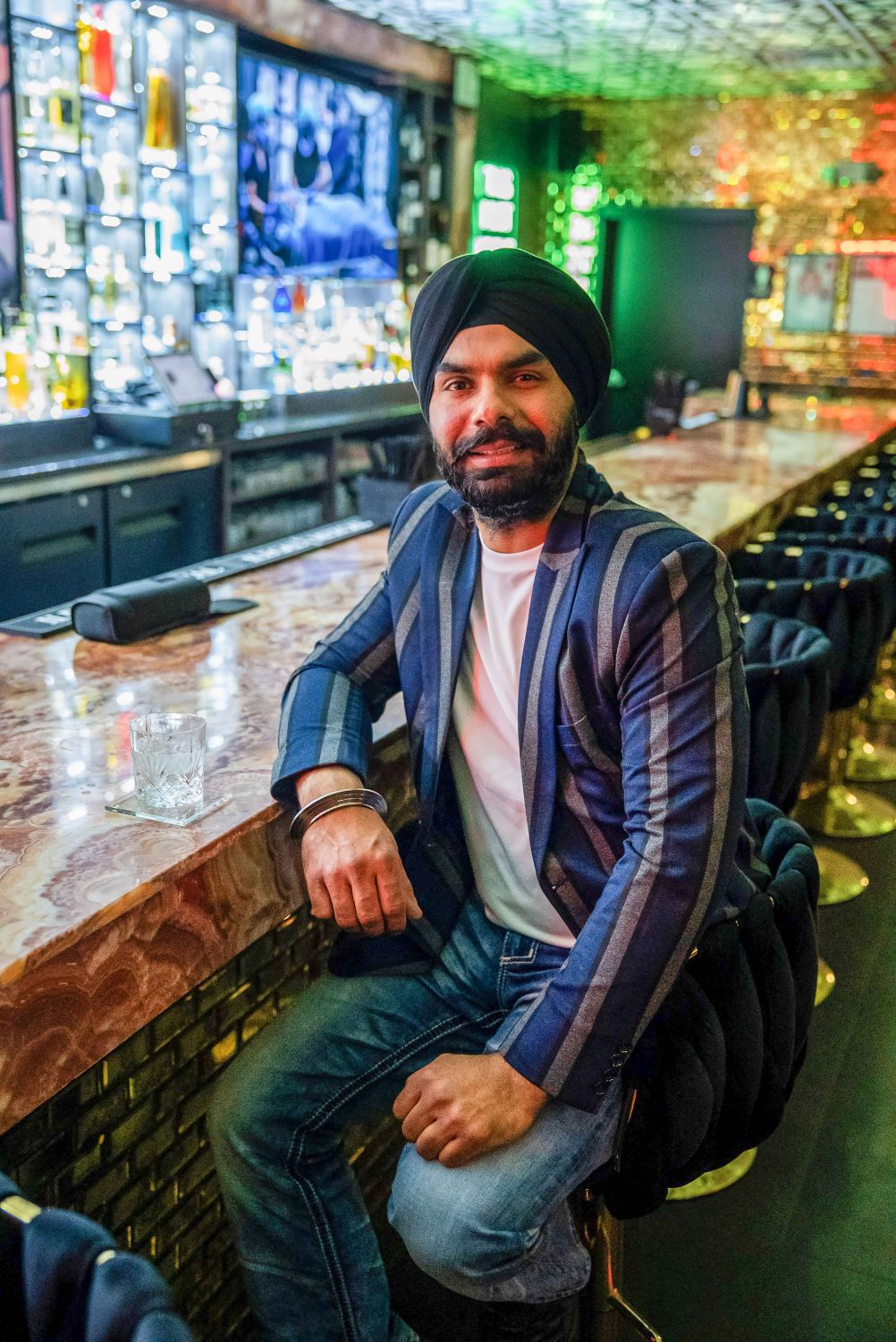
“When people walk into Socialize, I want them to immediately think, ‘Whoa, okay, I’m definitely coming back here’,” says Gundeep “G” Singh, second generation owner.
Socialize operates six stores in Maryland, including Baltimore locations. Anyone who has visited this business knows exactly what Singh is talking about. This is a beverage alcohol retailer that truly stands out from the rest.
It all began in the early 2000s, when Singh was in high school. His father bought their family’s first liquor store in 2003, then called The Liquor Store, in Baltimore. Like many who come from family businesses in this industry, Singh grew up helping out at the shop when not at school. “We both learned together,” he says of these years with his father. “We maneuvered through it together.”
“Back then the trends were all Smirnoff, Hennessee, Absolut,” he adds. “There were hardly any flavors. There were fewer liquor stores on the road, hardly any competition. We were the largest liquor store on the road. Even so, I always saw potential in our location.”
When Singh graduated from college, he had to choose whether to join up with the family or go off and try his own thing.
“I took a moment to think about it,” Singh recalls. “I saw my dad working hard and I thought that we could be stronger together. I thought that I’d join up with him so that we could accomplish more together.”
Today, Singh still works with his father, managing different locations within the family business.
A Vision Brought to Life
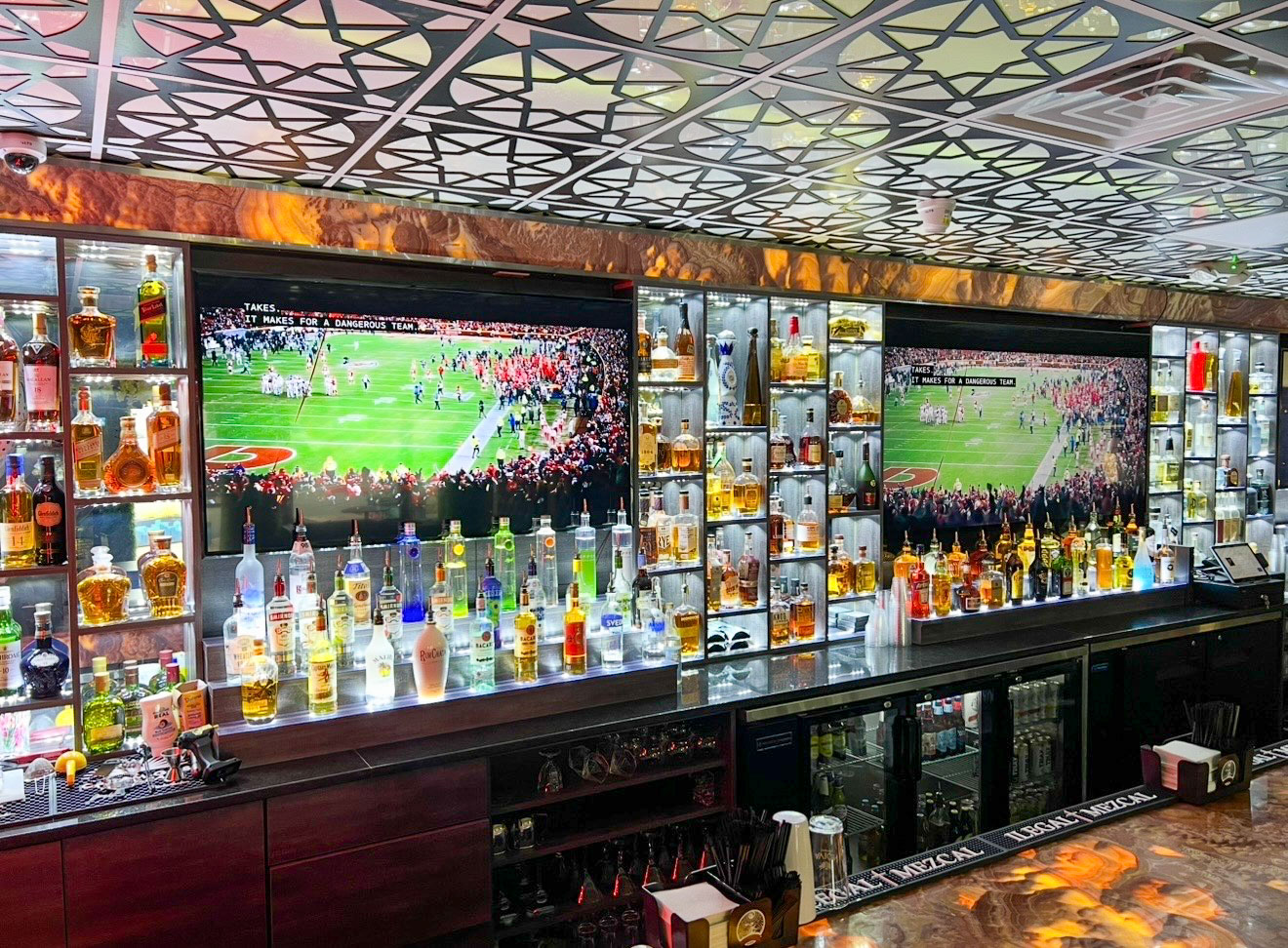
Perhaps most noticeable about Socialize is that most locations include an adjacent bar. Countless liquor stores across the country contain a functioning back bar, a spot onsite where customers can order drinks, including barrel picks and local brews. Socialize does this a little differently, and with much more style.
Rather than an opportunity to sample store picks and other bottles for purchase, Socialize’s on-premise part is more about experience. Singh has successfully expanded their family’s brand from liquor stores into nightlife. This has attracted a whole new customer base, and changed the way that many people in Maryland think about what beverage alcohol retail can accomplish.
It all goes back to Singh’s vision around 2015.
At the time he was managing the family’s first store in Baltimore, a liquor license on the same road of the location became available.
“I saw an opportunity for us to become a bar, liquor store and restaurant,” Singh says. “I told my dad, we have got to stand out as a liquor store in our area to attract customers. I wanted people coming here not only to buy a bottle, but also to have an experience.”
“We’re a small business,” he adds, “but my thoughts are always big.”
He researched whether he could legally combine the available on-premise license with the family’s liquor license. Convinced that the plan worked, Singh and his family made the investment. Soon, a bar and lounge would open up adjacent to that liquor store.
“In that era, that’s what made us unique,” Singh says.
Other beverage alcohol retailers in Maryland did already operate an on-premise component. But what separated Socialize was how they rebranded in their evolution. Originally called The Liquor Store, the family chain added the term “Socialize” to their business, which is what they’re now commonly known as.
Singh began redesigning the location. Out went the wooden shelves, IBM cash register and other vestiges from the industry’s past. In went glass walls, marble floors and chandeliers. Neon lighting illuminates the chic lounge next door.
The location became half bar, half store. “We rebranded as two business at one location,” Singh says. “It brought in a different crowd.”
“We were the first in our state to do this in the best way possible, with our branding,” he adds.
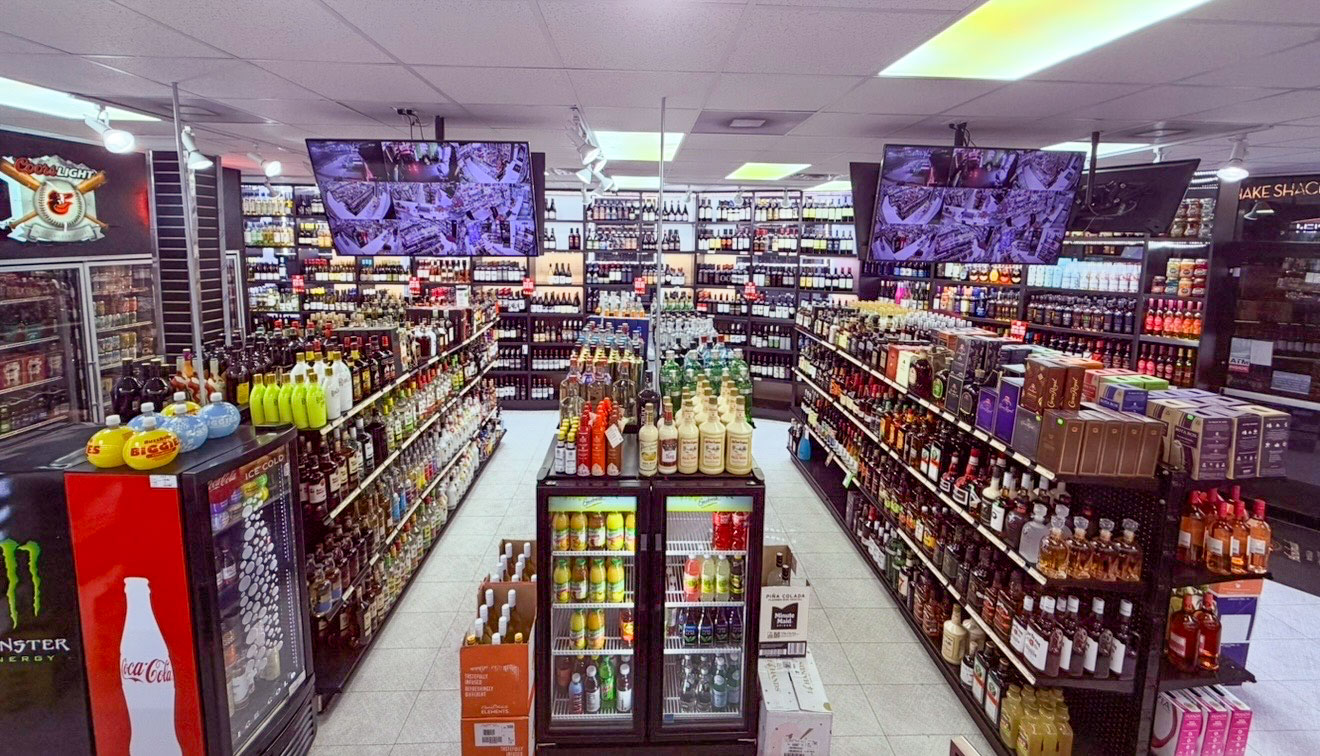
Reducing the size of the off-premise side helped relieve a problem over there. “It decreased our buying pressure,” Singh explains, helping alleviate the “SKU-mageddon” that stores faced in those days with too many products. “It decreased our packaged goods size, so now we didn’t have to carry as many bottles.”
Through word-of-mouth advertising, the new store/bar concept quickly gained a loyal following. Singh wanted to keep the momentum rolling.
“After we saw that the combo concept was a hit, we thought that it could work elsewhere,” Singh says. “We made sure that any future store that we bought, we could turn it into a combo account.”
Today, Socialize owns six locations, five of which are on/off-premise combination locations.
Unique Operations
These dual sites make for unique operations. Depending on local county law, the bar and liquor stores are connected by a door between the two. At first, this was a typical glass door that people could see through. But Singh realized that customers in the off-premise side were peaking through at the neon-lit bar on the other, which took away from the on-premise atmosphere. Now the connecting door is dark and tinted.
In terms of staffing these similar but-different businesses, the employees on either side have little to do with one another, Singh says. “There’s usually two different teams, depending on the location.”
Party promoters do much of the work on the bar side, helping run popular happy hours while staffing bartenders. Socialize’s happy hour specials originally showcased only a few items, but now mostly every product is half off from 5 to 7 p.m., including Patron, Don Julio and cocktails.
Singh leans into this experiential mindset. “I try to concentrate on the customers’ five senses,” he says. “For sight, our stores are brightly lit, and we have neon lighting in the bars. I want our stores to smell nice. So we put air freshener products in our vent system, like what you smell when you walk into a casino.”
Local Trends
As with any local chain store, Socialize sees different trends depending on the location.
The Towson, MD, spot is near Towson University, an enormous public university. This makes for a college town atmosphere, which creates certain buying patterns.
“There it’s all Buzzballz, Twisted Shotz, impulse buys,” Singh says. “Post Meridiem, XXL.”
However, at the Baltimore location, the consumer trends lean more towards tequilas.
“People are looking for 100% agave, organic tequilas,” Singh reports. “People are really increasing their knowledge in tequila, and they want to do it further,” by expanding their collections and palates for agave spirits.
“Lagartona was one brand we brought in by customer demand because it’s organic,” he adds.
Other brands doing well at the Baltimore location include Clase Azul, Tequila Ocho and Lalo.
Another key trend that Singh points to is social media marketing, which has only grown in size of importance for Socialize.
“When we started off, we did radio, print and email marketing,” Singh recalls. “Post-pandemic, I realized that all of that is old-school. Now we’re more focused on SEO and how your website can better pop up when people search online. And we’re doing pay-per-click adds on Instagram and TikTok.”
“We’re getting better at understanding the algorithms of Instagram and TikTok,” he adds. “I hired a whole team to handle social media and am always learning more about social media with them.”
This includes getting better with timing.
“If you want more views, there’s a particular time and day to post,” Singh says. “If we’re posting about a party today, then post at 5 p.m. that day, because that’s when folks are getting off work and opening their phones to see where the party is that night.”
Like many other social media-savvy businesses, Socialize has had success by bringing in influencers. In exchange for comped drinks or other forms of payment, these popular content creators with huge digital followings will post about what’s happening at the store.
“We’ve found that that trend has been the most effective in terms of engaging with the public,” Singh says. “We’ve had people walk in and say, ‘I just saw your espresso martini on Instagram. Could you make it for me?’”
Singh’s social media team is always reaching out to influencers with invitations and offers. And once the local community of content creators sees their peers posting about your place, they will likely reach out and ask if they can come in for videos themselves. Singh says that it was tough getting influencers in at first, but once a few posted about Socialize, then all the rest became interested as well.
“Now we have influencers asking us when they can come in,” he adds.
What’s Next?
Singh remains focused and excited on how he can expand and improve the customer experiences at his family’s business. “I love what I do and I do it with passion,” he says. “Every day, we’re selling liquor and wine, and I get to tell people what tastes like what and what pairs with what.”
At the original location in Baltimore, he’s imagining a hookah lounge built into the back. “Hookah has become very popular,” Singh says. “Honestly, I think that hookah and vaping have taken away from our business a little bit. So I’d like our place to become a go-to place for people” who also enjoy those hobbies.
In Towson, Singh’s next vision is to expand the bar and lounge into a nightclub. I visited this site myself last year during our magazine’s 2025 Beverage Alcohol Retailers Conference in Maryland. Singh’s took us through the backrooms, the potential future nightclub, concrete rooms still used as storage while construction begins. The future was before us. Listening to a visionary talk, with his genuine passion for business expansion and customer experience, it’s easy to believe that anything is possible.
Kyle Swartz is editor of Beverage Dynamics. Reach him at kswartz@epgacceleration.com. Read his recent piece, How to Sell Allocated Whiskeys.
The post Socialize Modernizes the Industry appeared first on Beverage Information Group.