
WSWA’s Access LIVE 2026 Underscored Unity Across the Three-Tier System
The beverage alcohol industry congregated en masse as Access LIVE 2026 opened its doors at Caesars Forum in Las Vegas. Held February 2-5, curiosity permeated through the walls as attendees pondered the state of wine, beer and spirits in the midst of changing consumer preferences.
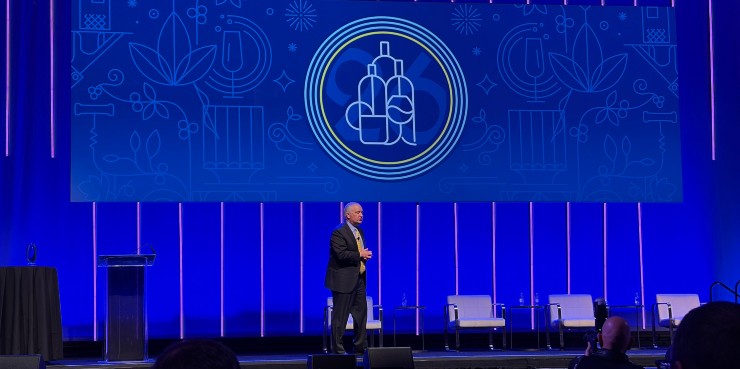
However, the event’s Opening General Session, held Monday, February 2, delivered a powerful mix of business insights, setting the tone for three days of collaboration, innovation and inspiration.
WSWA board chair Cutter Smith, co-president of Eder-Goodman, opened the session by emphasizing resilience and shared responsibility across the three-tier system. “We’re in a moment of incredible change,” he said. “But we’re also in a moment of extraordinary opportunity, and none of us are alone in that.”
Smith encouraged attendees to view the current state of the industry not as a challenge to endure, but as a chance to innovate, adapt and strengthen partnerships across wholesale, supplier and retail channels.
WSWA president and CEO Francis Creighton reinforced that message by underscoring WSWA’s role as both advocate and connector for the industry: “We exist to advocate for you, not just in Washington, D.C., but in every statehouse and regulatory chamber across the country. Effective advocacy requires unity and engagement from all corners of the industry, reinforcing the idea that progress depends on collective action, clear communication and a shared commitment to modernizing the beverage alcohol marketplace.”
Facing Headwinds as a United Front
If one thing was made clear throughout the entirety of Access LIVE 2026, it’s that the beverage alcohol industry today is particularly turbulent than it has been in the past, but we must keep up. New product categories, regulatory pressures and an increasingly fragmented consumer base have created uncertainty and complexity.
But amid this upheaval, Smith noted during the event’s Opening General Session the opportunity this presents for the three tiers — suppliers, wholesalers and retailers — to continue working together.
“When there are challenges, there is also opportunity,” he said to the crowd. “I read about the struggle, and like many of you, I’m baffled by the state of things. But I’m an optimist. Generations before us have managed and adapted during their own challenging and precarious times, just like we will.”
“This isn’t a time to retreat into silos,” Smith continued. “It’s a time to work together, learn from one another and make room at the table for new ideas and new players.”
That message resonates across all segments of the industry. From the growth of alcohol-free and hemp-derived THC beverages to the rising pressure on traditional spirits categories, the forces at play are too large and too interconnected to be addressed in isolation. No single tier or company can tackle these disruptions alone.
As Smith put it, “The only way we move forward is together — distributors, suppliers, retailers — united by a shared interest in building a stronger, smarter, more resilient industry.”
“We’re not just advocating for the status quo,” said Creighton, following Smith’s speech. “We’re advocating for a modern marketplace, one that values fairness, accountability and the ability to evolve.”
Creighton made it abundantly clear that from his vantage point, the most effective form of advocacy happens when the industry speaks with a unified voice, not fragmented by infighting or territorialism.
Growing Business Through THC Beverages
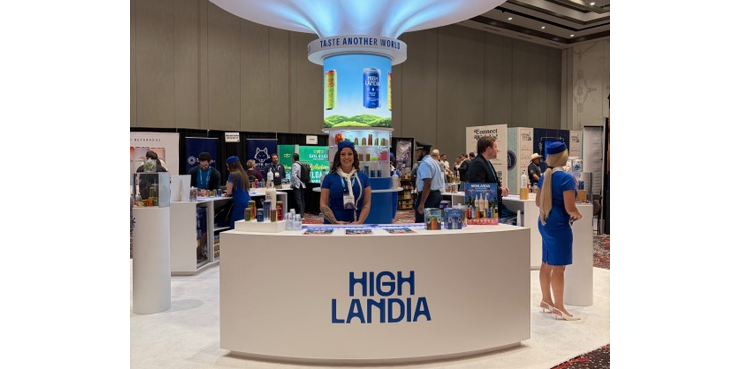
Part of being a united front and adapting to changing consumer preferences is accepting the fact that cannabis-infused beverages are here to stay. Years ago, these brands had booths on trade show floors that were secluded to their own corners, separate from the alcohol products.
Today, these brands sit amongst other wine, beer and spirits companies, no longer segregated to a certain area, but joined in with the rest of the beverage alcohol industry.
And the same can be said when making shelf space for these beverages.
Lacey Sadoff, president of Badger Liquor Co., Inc., said during the Wholesaler Power Hour: What Wholesalers Really Think About Intoxicating Hemp panel discussion that beverage companies are very tuned into selling, distributing, delivering and stocking intoxicating beverages.
“For us, it’s easy to integrate a new category into the same sound model we use for alcohol beverages,” she said. “Now is such an important time in the wine and liquor industry for innovation. Things are clearly changing. We need something new and fresh to get inspired around and continue to grow our businesses into the future.”
Lacey also mentioned that due to the large variety of these infused beverages, they’re able to easily fit into the market.
“We offer products in various different formats and packaging, so whatever consumers are looking for and whatever retailers are serving, we have a product for them. It’s been very successful for us to have a variety of these beverages in our portfolio, since it isn’t a one-size-fits-all model.”
WSWA analysts Danny Brager and Dale Stratton also talked infused beverages at the Access LIVE Main Stage, discussing how younger consumers are redefining the role alcohol plays in their lives and how retailers need to adjust accordingly.
“The lines between categories are blurring,” Brager told the crowd. “From non-alc and hemp to RTDs and functional beverages, consumer choice is broader than ever — and that’s both a challenge and an opportunity.”
As Stratton noted, “It’s time to reframe the conversation. Focus on solutions. Control what you can control.”
Redefining Consumer Engagement in 2026
The key takeaway from WSWA’s Access LIVE 2026 is that even though the industry is up against a lot of change, as long as companies can pivot to offer customers what they want, they can stay successful.
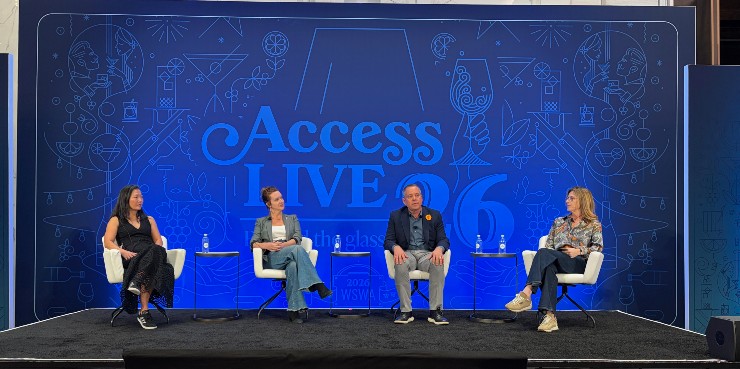
A powerhouse panel discussion led by Breakthru Beverage Group’s Danny Wirtz explored evolving consumer engagement strategies.
Rick Tigner, CEO of Jackson Family Wines, challenged the audience to rethink traditional models. “We need to sell experiences, not just wine,” he said.
Fuad Hannon, vice president at DoorDash, commented on how the on-demand platform is reshaping access and discovery: “The digital shelf is infinite, but attention spans aren’t — personalization wins.”
Bacardi’s Aleco Azqueta emphasized storytelling, stating, “People don’t remember facts, they remember stories. That’s how we build emotional connection and long-term loyalty.”
“We’re not asking anyone to give up their identity or their strategy,” Smith said in his opening address. “We’re asking them to engage, to contribute, to listen and to show up for the conversations that matter.”
This perspective is increasingly vital as the regulatory environment around alcohol grows more complex. Issues like interstate shipping, hemp beverage oversight and tax reform require coordinated, tier-spanning responses. If the industry can’t work together to present solutions, others — including less-informed lawmakers and outside interest groups — will step in and shape the landscape for them.
The post WSWA’s Access LIVE 2026 Underscored Unity Across the Three-Tier System appeared first on Beverage Information Group.