
THCA 101: Everything You Need to Know About This Cannabinoid
The cannabis plant is home to hundreds of phytocannabinoids (natural cannabinoids) that can offer a variety of beneficial effects to those who consume it in different ways.
There are at least 120 that have been identified to date, according to the Alcohol & Drug Foundation. The most well-known are delta-9-tetrahydrocannabinol (THC) and cannabidiol (CBD), while other common types include cannabigerol (CBG), cannabinol (CBN), cannabichromene (CBC) and tetrahydrocannabivarin (THCV).
Another lesser-known cannabinoid is making its way around the industry: tetrahydrocannabinolic acid (THCA).
This non-psychoactive cannabinoid is the precursor to Delta-9 THC and naturally occurs in raw cannabis and hemp. On its own, THCA doesn’t produce a high, according to an article by HashDash, but when heated (through smoking, vaping or cooking), it undergoes decarboxylation, converting into Delta-9 THC.
So, what exactly does THCA do and why are more brands using this cannabinoid in their products? We spoke with several industry experts to break down everything you need to know.
What is the Relationship Between THCA and THC?

As the HashDash article explained, THCA can be converted into Delta-9 THC when heated. But Kelsy Raap, director of education and outreach at Upstate Elevator, breaks down the science for us.
“THCA is THC in its ‘acidic form,’” she explains. “It’s the most prevalent cannabinoid in cannabis, with CBDA the most prevalent in hemp, and the percent of THCA is what companies use to calculate the potency of a cannabis strain. There is very little THC in a living cannabis plant, so laboratories use a calculation that accounts for the conversion of THCA to THC.”
THCA converts to THC between 220-245 degrees fahrenheit, according to Raap. Within this range, the higher temperatures (230-245 degrees) will result in a faster conversion. However, the chemical reactions taking place can go too far, at which point the THC can begin a secondary conversion, turning into CBN.
“THCA can convert into THC without heat applied, through exposure to oxygen or UV light, but it is a long, slow process with inconsistent results,” Raap adds.
On its own, THCA doesn’t produce the “high” typically associated with cannabis because it doesn’t readily bind to the same receptors in the body as activated THC, according to Craig Hendersen, CEO and founder of Extract Labs CBD. This is why most companies heat THCA to get the desired effects.
How Does THCA Work in the Body?
The “A” in THCA refers to a carboxylic acid group that slightly alters the molecule’s structure and makes it larger and more polar than THC, according to Scott Lynch, HashDash founder and CEO.
“That difference changes how the molecule interacts with the body, particularly at the receptor level, and is one of the main reasons THCA behaves so differently from THC,” he says.
“There is insufficient research to determine exactly how THCA is metabolized in the human body,” Raap adds. “While THC has been more thoroughly studied, much of the evidence still relies on animal studies.”
Rapp explains that our bodies can absorb both THC and THCA through the digestive tract. Once the compound makes its way to the liver, however, the body metabolizes THC and THCA differently.
“The liver converts THC into 11-hydroxy-THC (11-OH-THC), which is even more psychoactive than THC,” she says. “Some research suggests THCA remains largely intact and does not undergo conversion into another compound.”
An article written by Dr. Dustin Sulak suggests that THCA can be effective in relieving pain, with Dr. Sulak stating how his patients have found that products containing some THCA along with THC are the most effective for pain and other symptoms.
“Interestingly, one study found that THCA acts as a positive allosteric modulator (PAM) of the CB1 receptor. This means that while it doesn’t stimulate the receptor directly, it can amplify the effect of molecules that do, such as THC and our bodies’ own endocannabinoids. This is one explanation why THC products that contain some THCA may be more effective; another possibility is that THCA may slow the breakdown of THC, and another that the direct physiological effects of THCA compliment those of THC,” the article states.
While more research still needs to be done on THCA, Caleb Chen, founder at The Highest Critic, says the current research that has been done on the cannabinoid is promising.
“The current research is promising about THCA’s anti-inflammatory and neuroprotective properties, but research into this space has been stymied by government regulation,” he says.
Agreeing with Chen is HashDash’s Lynch, stating that most of the research that’s currently out there is from early “pre-clinical” studies.
“These studies suggest THCA does deliver anti-inflammatory and neuroprotective (as well as anti-nausea) properties that operate through bodily mechanisms that are separate from THC,” he notes. “However, much of this work has been done in lab or animal models. Human research is still very limited, so these findings should be viewed as promising but not conclusive.”
According to Upstate Elevator’s Raap, research from 2017 suggests that THCA has a stronger ability to activate PPARy (a protein that switches genes on & off) than does THC. When THCA activates PPARy, it triggers several protective effects in brain cells:
Increases mitochondria – gives brain cells more energy factories
Reduces inflammation – calms down overactive immune cells in the brain (microglia and astrocytes)
Protects cells from dying – helps neurons survive stress and toxic conditions
Reduces inflammatory markers – lowers chemicals that cause brain damage
“The findings related to inflammation are applicable to immune cells across various vital systems–including the nervous & digestive systems, cartilage and collagen production,” Raap says. “Many cannabinoids, including THCA have been found to inhibit pro-inflammatory cytokines, and suppress enzymes like COX-2 and MMP9, which are involved in tissue damage and chronic inflammation.”
How Can People Use THCA?
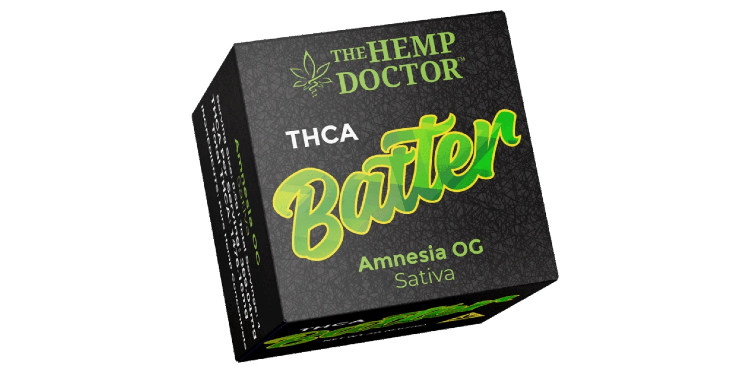
Since THCA turns into THC when heated to a certain temperature, the cannabinoid should be consumed in its raw form in order to get the desired effects.
Ryan Wright, co-founder and COO of Smokiez Edibles, notes the most common ways that people consume THCA:
Diamonds or flower
Tinctures or topicals
On the other hand, Chen says the only way he’s seen people use straight THCA is through juicing cannabis inflorescence or leaves.
“Those that have access to THCA diamonds can also make their own tinctures,” he says. “Those that seek to use THCA instead of THC are doing so orally and topically.”
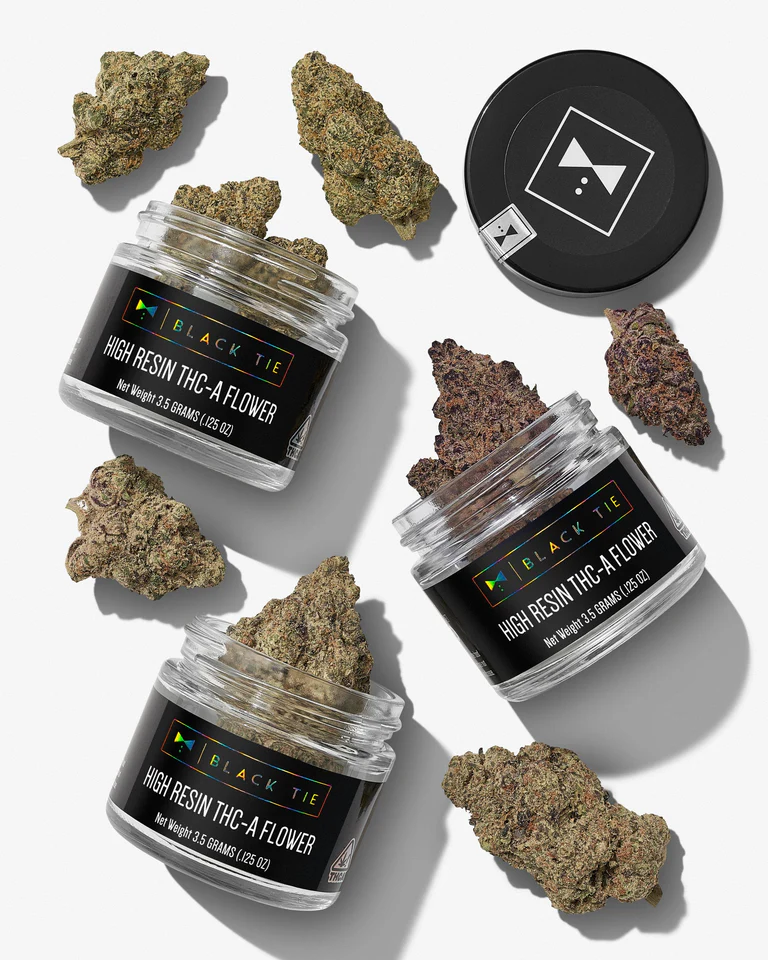
Raap also notes that the most potent access to THCA would be through juicing freshly picked hemp flowers.
Oral THC applications include raw edibles and capsules. These consumption methods allow consumers to get the alleged therapeutic benefits of THC without getting high.
However, Raap warns users about the instability of THCA when it comes to tinctures.
“Acidic cannabinoids are more unstable and can convert from prolonged exposure to light and oxygen, so a THCA tincture may lose its potency more quickly than a capsule,” she says.
Dr. Sulak states in his article that another common accessible method for ingesting THCA is via cannabis tea.
“Because THCA is more water-soluble than THC, a cup of cannabis tea will primarily deliver THCA with low amounts of THC. The hot water only converts a little THCA into THC because decarboxylation requires higher temperatures to occur quickly. I typically recommend my patients use a small piece of cannabis flower, about the size of a pea, and steep in just boiled water for five minutes,” the article states.
Is THCA Federally Legal?
While all of this information can help you determine if THCA is the best option for the type of effects you’re looking for, the most important question remains unanswered: is THCA federally legal?
“THCA hemp is legal under the Farm Bill due to a loose definition of ‘hemp,’ which has facilitated varied interpretations,” Raap explains. “The Farm Bill’s definition of hemp names the amount of THC (rather than THCA, THCV or any other form) as the determining factor in whether the plant is considered hemp or cannabis.”
“The 2018 Farm Bill carved out any cannabis plants with less than 0.3% delta-9 THC as hemp plants,” adds Chen. “Total THC, a legally defined term, includes a conversion rate for turning the THCA into post-decarb THC numbers for more accurate reporting.”
However, the most recently updated language to the Farm Bill requires the total THC, accounting for all forms, to be under a threshold that is effectively impossible given existing cultivars, according to Raap. It will take time to breed new cultivars that can satisfy this new regulatory requirement.
The post THCA 101: Everything You Need to Know About This Cannabinoid appeared first on Beverage Information Group.