
6 Drinks Trends to Leave Behind in 2025
2025 was a whirlwind year for the drinks business. Right off the bat, the industry was plunged into chaos as President Trump’s sweeping tariffs brought with them prolonged fear, uncertainty, and increased costs of operation. And that was all before the year was even halfway through. From there, some things just got weird. Really weird.
There was an abundance of protein proliferation — and nothing, we mean nothing. was spared. Matcha similarly snuck its way into almost everything under the sun, sparking global shortages as consumers clamored to get their fix. And through it all, we bore witness to the near complete disappearance of the reservation-free restaurant bar ready to accommodate walk-ins.
With 2026 just around the corner, it’s time to take stock of the trends that defined the past 12 months and determine which ones should stay firmly embedded in 2025. Here are six drinks trends we hope the industry leaves behind when the ball drops on New Year’s Eve.
The Belief That Non-Alcoholic Beverages Need to Have Some Other “Function.”
Dusan Petkovic – stock.adobe.com

Innovation in the non-alcoholic beverage space has been a net good. NA beers, wines, and spirits are better and more diverse now than they’ve ever been, with refined techniques and ingredients leading to flavor-forward, balanced expressions. But somewhere along the way, we lost the plot and came to the conclusion that these drinks needed to have some purpose other than simply tasting delicious and being alcohol-free. Do non-alcoholic Margaritas and Espresso Martinis really need to have ingredients like reishi mushroom and L-theanine to help with focus or relaxation? Can’t they just taste good? Next year, let’s let non-alc drinks be exactly that: delicious, zero-proof versions of their full-proof counterparts that aren’t made with any additional “health benefits.” Isn’t the “health benefit” the lack of booze anyway?
Adding Protein to Everything. Literally Everything.
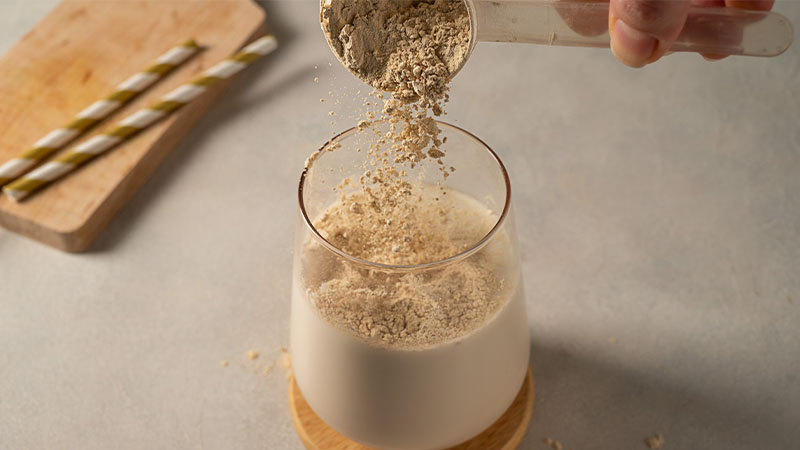
2025 was the year everyone lost their minds in pursuit of swole. Khloé Kardashian debuted Khloud Protein Popcorn, which contains 7 grams of protein per serving. Alex Cooper’s hydration brand arrived with 10 grams per bottle. Starbucks announced the addition of protein matcha, protein lattes, and protein cold foam. Things got so out of control that at one point, the flashy protein bar company David Protein seriously launched frozen cod fillets for $55 a pop. Naturally, because nothing is sacred, our alcoholic beverages were not spared in the protein revolution. Now, RTDs with 8 grams of whey protein are a thing, bars are offering guests the choice to add protein to their cocktails and mocktails, and there’s even a Texas-made vodka billing itself as the world’s first protein and superfood spirit. Enough is enough.
The Compulsive Need to Transform Coffee and Tea Into Dessert Drinks.
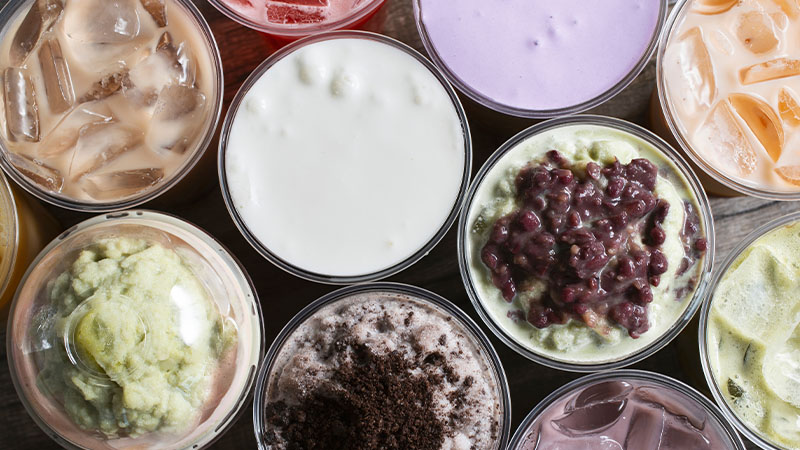
It’s no secret that Gen Z has fully embraced “little treat” culture, with the younger generation often reaching for fluffy, sugar-laden caffeinated beverages as morning or mid-day pick-me-ups. We don’t blame them for needing a little something sweet — just look at the state of the world. But the demand for caffeine-rich dessert drinks has pushed things to a new level, and they’ve gotten out of hand. Carrot cake and tiramisu lattes don’t need to be served with an entire slice of cake on top. Can matcha lattes just be matcha lattes or do we really need to Dubai chocolate-ify them? This isn’t to say these bevs aren’t tasty. Of course they’re tasty. But they’re also expensive, and we can’t help but wonder if these $15 drinks are the reason a simple hot coffee is pushing $5 these days.
Putting Matcha in Places Matcha Does Not Belong.
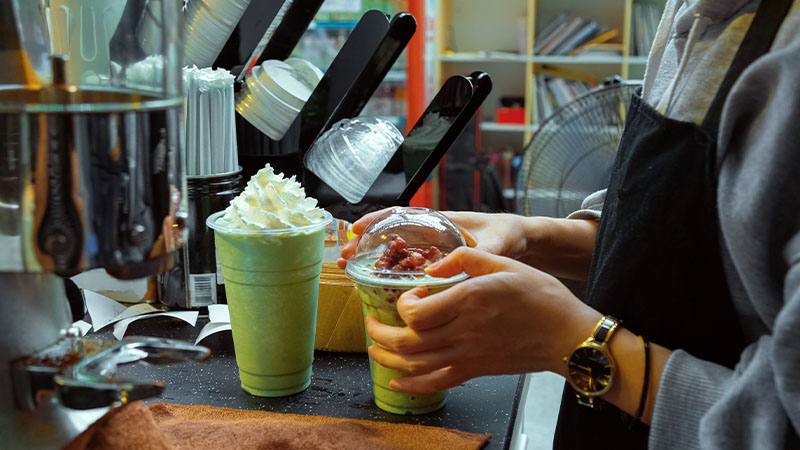
It’s a tale as old as time for consumers to take a trending ingredient and cram it into food and drinks it has no business being in. For some reason, we still hoped matcha would be spared from this fate. Oh boy, was it not. In the late spring, matcha beer — it’s exactly what you think it is — took over social media feeds, with the green, herbal tea said to complement the taste of Japanese lager. Matcha Martinis were next, with some on TikTok billing them as an alternative to (or even the next) Espresso Martini. But matcha wasn’t just added to random things — random things were also added to matcha, a tea that was initially enjoyed for ritualistic purposes. Fruit syrups were to be expected, but was anyone predicting that lemon pepper matcha would enter the fold? We doubt it.
Restaurants Requiring Reservations to Sit at the Bar.
anniebrusnika – stock.adobe.com

The restaurant bar has become an interesting phenomenon in the post-Covid era. What was once a spot seated on a first-come, first-served basis has transformed into a reservation hellscape, eliminating the ability to enjoy a quick drink while you await your table. And frankly, we’ve had enough. While we understand that restaurants have to maintain a certain profit margin — and keeping bar seats filled helps them do that — making your whole bar reservation-only feels like overkill. Especially considering many restaurants are not equipped with large enough entry spaces to accommodate guests waiting for their tables. What are we supposed to do — stand outside in the cold while we wait? We’d much rather be drinking a Martini.
Wine Industry Infighting.
Quality Stock Arts – stock.adobe.com
By now it’s common knowledge that the wine industry isn’t exactly thriving. It’s also pretty common knowledge that no one can agree on precisely what the category needs to do to improve. But rather than band together, it seems like those in the industry can’t stop fighting about who is drinking and talking about wine “the right way.” Some argue that the industry has become too approachable and needs to bring back gatekeeping, a notion that flies in the face of the years-long trend of democratizing wine. Others seem to believe that it’s the job of wine journalists to remain positive and never publish anything that could be perceived as disparaging. And this near-constant disagreement about what the wine industry really needs isn’t doing much to convince people to drink more wine. It’s perhaps having the opposite effect, driving consumers who might be interested in the category to explore other options.
The article 6 Drinks Trends to Leave Behind in 2025 appeared first on VinePair.