Whiskey Tourism Booms in Kentucky
Visit Kentucky nowadays and you can easily recognize that whiskey tourism is flourishing. Along the highways, bourbon tour buses safely transport throngs of visiting enthusiasts. Bachelor and bachelorette parties, dressed in matching comical clothing, hop from distillery to distillery. In Bardstown and Louisville, giant visitor centers welcome increasing numbers of curious fans making the trip to spirits mecca.
This part of the Bluegrass State has blossomed with alcohol tourism in recent years. It’s become a must-visit, “bucket list” destination for whiskey aficionados, similar to Napa and Sonoma for oenophiles.
For example, consider the impressive growth of the Kentucky Bourbon Trail. Created by the Kentucky Distillers’ Association in 1999, the Trail continues to shatter records. A total of 2.7 million visitors made the trip in 2025, up from 2.3 million the year prior. This includes people from all 50 states, according to the organization, and more than 20 countries across six continents.
“The combination of American history, picturesque scenery and legendary Kentucky hospitality continues to attract people from all over the world to get a deeper look into what makes our Bourbon family so special,” says Eric Gregory, president of the Kentucky Distillers’ Association, in a press release.
The Trail now comprises 60 distilleries in all corners of the Commonwealth, with more participating facilities on the way. The result has been an economic boom for Kentucky distillers, an onsite sales spike at a time when off-premise numbers have slowed down.
Whiskey fans visit Kentucky with their wallets open. According to data provided by the tourism organization, most visitors stay three to five days in communities featuring a Trail distillery. These people spend $600 to $1,400 during their trip on dining, entertainment, lodging and transportation. After all, the industry tends to attract higher-earning consumers: 62% of Kentucky Bourbon Trail visitors have incomes above $100,000.
Kentucky Bourbon Festival
Perhaps the question most asked of whiskey industry folks outside of Kentucky — besides “What bottle should I buy my boss?” — is what to expect when visiting Louisville and Bardstown. And among the more important points to get across to people before they make the trip is this: Don’t expect to find rare bottles. Not amidst a sea of fellow bourbon-hunting tourists, and certainly not at reasonable prices.
Recognizing opportunity in this customer desire and buying challenge, the long-running Kentucky Bourbon Festival (KBF) revamped 2019. The new focus is on sampling top whiskeys, and allowing attendees to purchase hard-to-find bottles.
The consumer response has been enormously positive.
“The KBF has truly been a very positive story over the last 16 months. KBF has been selling out and bringing the top Kentucky bourbon brands and international bourbon enthusiasts together,” explains Randy Prasse, COO & President of the Kentucky Bourbon Festival. “In 2025, we had guests from 14 countries, in addition to almost all 50 U.S. states.”
“As distilleries continue to see the audience of bourbon enthusiasts the KBF attracts, they are increasingly interested in launching new products to our guests first — at least 11 brands launched new products at KBF in 2025,” he adds. “To me, the KBF has become to our guests what the Consumer Electronics Show in Las Vegas is to tech companies.”
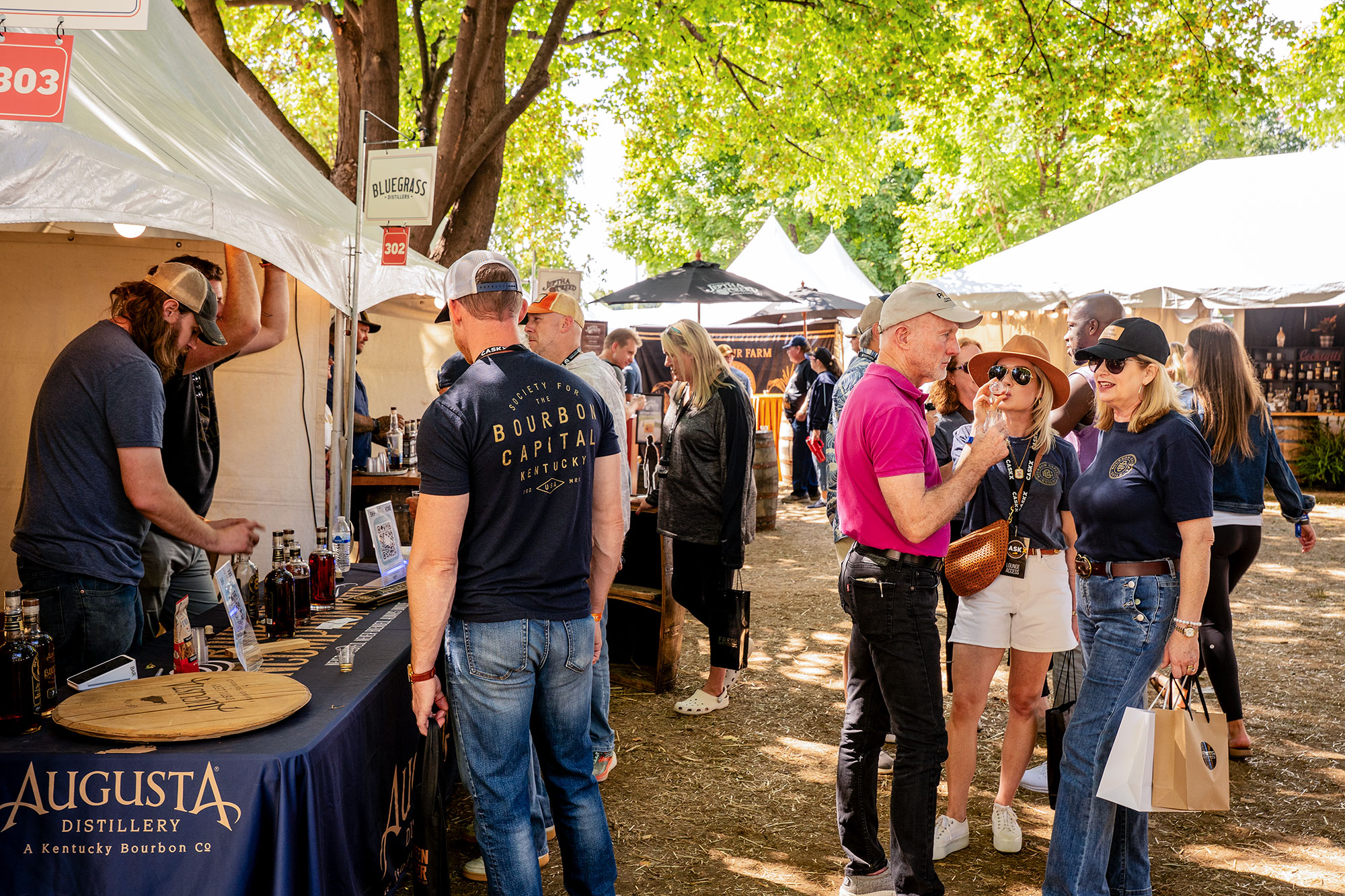
The annual festival takes place in fairgrounds along downtown Bardstown. Before the gates open every morning, attendees line up around the corner, waiting for their chance. Once allowed inside, people rush to distillery booths, where they line up again, for the ability to buy sought-after products.
The annual festival takes place in fairgrounds along downtown Bardstown.
Hard not to see this as an example of the enthusiasm for top-quality spirits that still exists in the industry, despite the ongoing pullback. Prasse agrees.
“From the KBF perspective — if 2024 and 2025 are indicative of what bourbon consumers are doing — there seems to be a positive mood swing in that they are now more able to find and purchase bottles of highly allocated bourbon that was previously only available on the secondary market,” he says. “We are all counting on the bourbon tourism to continue to grow and really level off the peaks and valleys of the industry. The peaks may not be as high as 2020-2022, but the valleys should never dip as low as what the industry saw ‘pre-boom’.”
The KBF is not just about buying bottles, of course. Numerous distillery booths across the fairgrounds pour all kinds of whiskeys, from name brand to newer releases. Master distillers, who have become celebrities like popular chefs, conduct signings. The people behind the brands are on hand to pour the products and explain exactly what went into making that particular bottle.
“Tourists — and bourbon enthusiasts specifically — care about the experience,” Prasse says. “It needs to be immersive and genuine, so the brand’s uniqueness comes through in the experience, as much as it does in their liquid. The quality of delivering the experience is also critical. Every year, we push ourselves to elevate the experience.”
Also important in properly promoting tourism is welcoming bourbon fans of all levels. Many people got into whiskey during the Covid-19 doldrums, and have since filled up their basement bunkers with unicorns, store picks and backup bottles. These people know everything about everything about whiskey. And then there are folks just beginning their bourbon journeys now. Effective tourism appeals to both types and everyone in between.
“At the end of the day, we bring bourbon enthusiasts and new bourbon consumers together, while the brands put their best effort into engaging with them,” Prasse says. “The KBF is unique in that regard. Beyond engagement, the ‘try and buy’ experience is unique to Kentucky — and the KBF was the first consumer event to package it for enthusiasts. We will continue to reinvest in the KBF in the Bourbon Capital of the World — Bardstown, Kentucky USA — while working with the brands to be a part of their growth strategies.”
Growth in Louisville
About 50 minutes north of Bardstown is where most folks begin their Kentucky whiskey journeys, in Louisville. After landing in nearby Muhammad Ali International Airport, enthusiasts head to hotels in the city along the Ohio River and Indiana border.
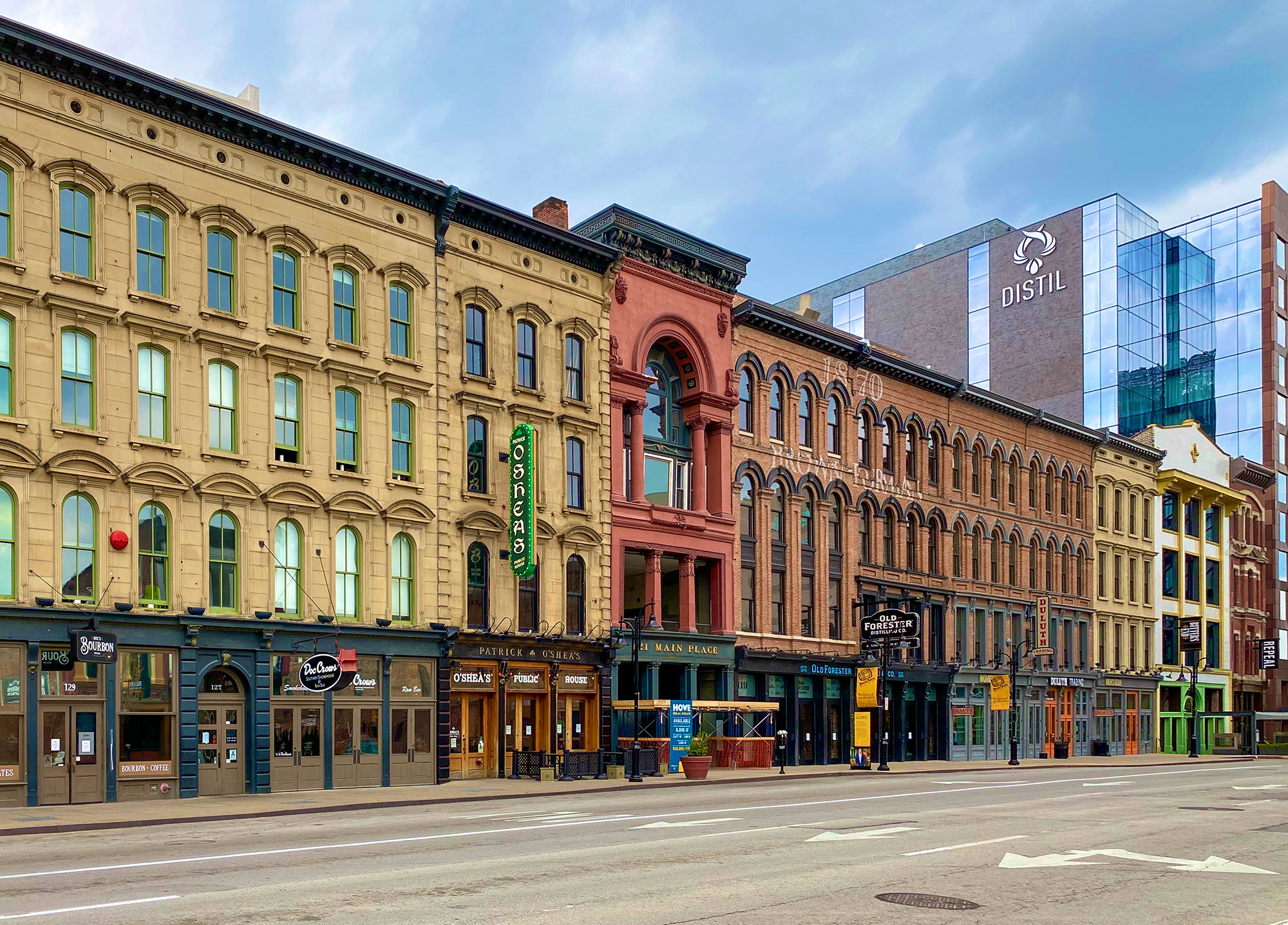
Bourbon tourism is booming locally. Whiskey Row, a historical downtown stretch of distilleries and visitor centers, has become an extremely popular area for visiting fans. Several miles down the road, the trendy NuLu neighborhood has also emerged as a hotspot for upscale food and spirits, including several producers and brand homes.
The entire city and its surrounding environment have embraced our modern enthusiasm for Kentucky spirit.
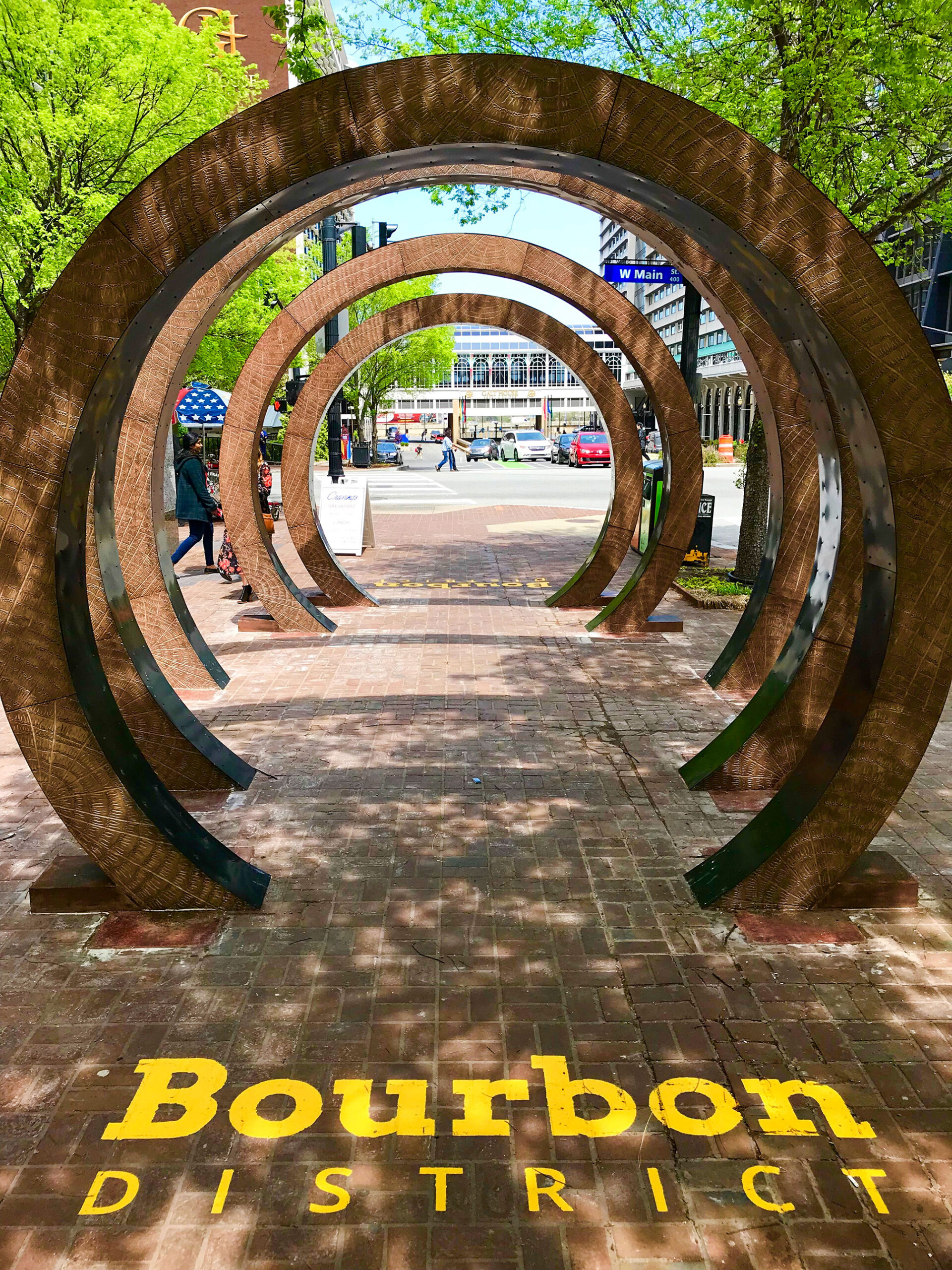
“Louisville’s bourbon tourism story continues to build momentum in a really authentic way,” says Stacey Yates, Chief Marketing Officer, Louisville Tourism. “What we’re seeing isn’t just growth for growth’s sake — it’s thoughtful investment in experiences that deepen Louisville’s identity as Bourbon City, while also giving locals new places to gather. An example is the soaring popularity of jazz music nights at Whiskey Thief Distilling in Nulu.”
“What’s remarkable is how quickly that evolution has happened,” she adds. “As recently as 2013, Louisville welcomed its first in-city bourbon tour. At that point, the aspiration was positioning the city as the Gateway to Bourbon Country — the place where visitors began their journey into Kentucky’s distilling heritage. Just over a decade later, that vision has fully matured. Louisville is no longer simply the starting point; it is the experience.”
Helping underscore this transformation is the opening of five new bourbon tasting rooms in 2025.
“From Whiskey Row to NuLu and Paristown Pointe, distillers are choosing Louisville because visitors want immersive, walkable experiences that connect bourbon to history, food, music and neighborhood culture,” Yates says. “Spaces like Pursuit Spirits’ live podcast studio, WhistlePig’s Vault inside a restored 1911 bank building, and Green River’s downtown speakeasy-style tasting room highlight how creative and diverse bourbon tourism has become.”
This concept of Louisville as an all-inclusive, walking experience for whiskey fans is helped by the many new restaurants, bars, and hotels that have opened up in recent years.
“Growth is being supported by broader downtown investment,” Yates says. “The opening of Hotel Bourré Bonne adds another high-quality lodging option in the heart of the bourbon district, making it easier for visitors to stay downtown, explore on foot and extend their time — and their spending — in Louisville.”
“Today, Louisville believes it is the only truly walkable whiskey destination in the world, with multiple distilleries, tasting rooms, bars, restaurants and hotels clustered in a compact, urban setting,” she adds. “Bourbon here isn’t a standalone attraction — it’s woven into the fabric of the city. As new distilleries, hospitality projects and neighborhoods continue to evolve together, bourbon tourism remains a powerful driver of visitation and a point of pride for the entire community.”
Yates believes the city saw 600,000 bourbon visits in 2025, besting 2024’s total of 573,116.
Whiskey Row, a historical downtown stretch of distilleries and visitor centers, has become an extremely popular area for visiting fans.
Pursuit Spirits
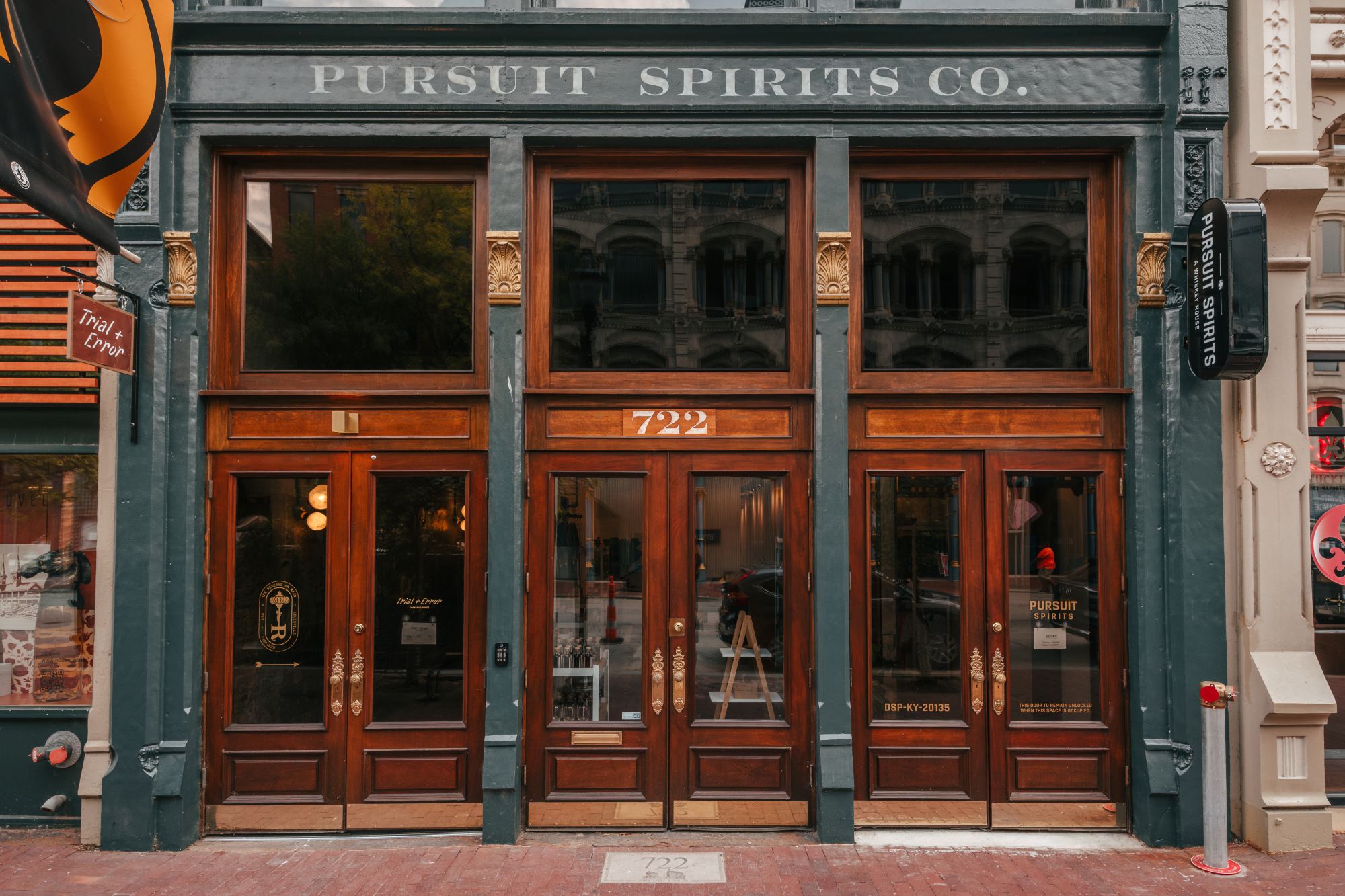
As Yates explained, what brings whiskey fans to Louisville, and Kentucky in general, are authentic, immersive experiences. For instance, Pursuit Spirits in 2025 opened a tasting room and podcast studio on Whiskey Row. This growing brand began as a podcast, Bourbon Pursuit, which became the most popular show of its genre, before branching into spirits. Today, the company reflects modern whiskey enthusiasm and tourism.
Last August, their Whiskey Row location opened with 7,500 square feet across two floors. The first floor is meant for tasting and business, with multiple rooms where visitors can fill their own bottles and sample potential barrel picks from Pursuit. The floor below is a cocktail lounge called Trial + Error.
“It doesn’t have our branding, which was done intentionally,” says Pursuit Spirits Cofounder Kenny Coleman. “This is a basement speakeasy. It needed its own personality. We have the largest bar owned by a distillery on Whiskey Row.”
The idea is to encourage visitors along their spirits journeys at their own pace and preference. It’s ideal for attracting customers of all levels of whiskey knowledge. Beside the bar is a glassed-in podcast booth, where fans of Bourbon Pursuit can watch Coleman and his colleagues at work. Altogether, it’s a welcoming, immersive, authentic experience.
“Our space is built for people on their whiskey journeys from zero to 1,000,” Coleman says. “At the same time, we’re not going to be the typical experience. We’re focused on hosting the consumer who has already had all the big distillery tours, and wants to know what’s the next thing. And that’s discovery.”
“At our bar, we want you to go discover what you like in whiskey,” he adds. “We have flights available. We have single barrels. We try to provide education without the feeling of stress.”
As for tourism, “We’re still seeing very strong numbers,” Coleman says. “It should make up around 15 to 20% of revenue for most places. For us, that will be closer to 40%.”
“There’s strength in numbers in Louisville tourism,” he adds. “You can see what they’re doing to promote the city. There’s more events now. More attractions and conferences. For instance, Ace Hardware held a conference here at the end of February. We got a spinoff from it. Weber Grill, Big Green Egg, and Meat Church all reached out to do onsite activities here.”
It’s no surprise that Pursuit Spirits has had success at their Whiskey Row location, given the unique blend of podcast and bar.
“The podcast has been a great driver of growth,” Coleman says. “We invite people to meet and greets at the bar. It’s a great opportunity for fans and brand engagement. I had one customer tell me that his dad had driven him here because they were listeners of the podcast. It’s an organic driver of growth and connection.”
Kyle Swartz is editor of Beverage Dynamics. Reach him at kswartz@epgacceleration.com. Read his recent piece, The 2026 Spirits Growth Brands Awards Winners.
The post Whiskey Tourism Booms in Kentucky appeared first on Beverage Information Group.