
Our 2026 Spirits Growth Brands Awards Winners
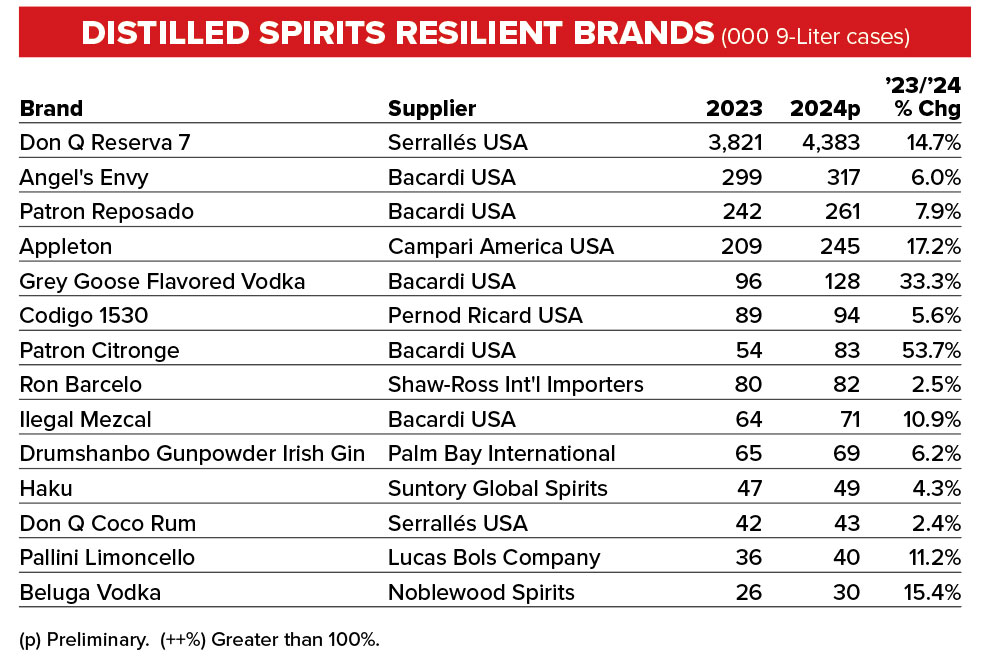
Following our 2026 Wine Growth Brands Awards Winners, we now present our spirits winners, representing the fastest-growing and most-consistent brands from the past year.
The beverage alcohol retail industry remains in a period of pullback and reinvention. We are years removed now from Covid-19 boom times, with record sales replaced by stubborn drawdown. Driving these industry challenges are shifting consumer trends and a tricky economy troubled by rising costs.
Consumer behavior has changed, especially among the younger LDA generation, who increasingly drinks less alcohol. Conscious of both their health and their wallets — and coming of age during a time of Covid lockdowns and widespread cannabis legalization — Gen Z would rather stay home and consume THC. This is a significant change from Baby Boomers, who love wine and spirits, and Millennials, who reach for whiskey and craft beer. Gen Z buying habits have benefitted no- and low-alc and hemp-derived cannabis beverages, at the cost of the rest of the alcohol industry.
Elsewhere, post-Covid inflation has cooled down from its eye-watering highs, but persists in our uncertain economy. Many consumers still feel the pinch, especially at the gas pump and while buying groceries. The on-and-off threats of tariffs, compounded by real and trade wars, has fueled further price spikes and consumer uncertainty in the market.
Another hangover from the pandemic was product buildup at distributors and liquor stores. As the Covid-era buying spree slowed down among consumers, cases accumulated at the middle and retail tiers. This has been another drag on the industry.
Altogether the result was continued choppy waters for many brands in 2025. But as our surprisingly large number of Growth Brands Awards winners demonstrate, many companies are figuring out how best to navigate our new era. Numerous brands achieved growth during a time defined by fickle consumers and changing trends. We applaud all of our winners for their remarkable achievements. Here’s what worked in 2025.
Adapting with Modern Tastes
Many brands that excelled despite challenges last year did so by tapping into modern consumer tastes.
For instance, Pallini Limoncello, from Lucas Bols Company, which won a Resilient Brand.
“We were able to succeed by leaning into the categories that are showing resiliency as we continue to deal with various headwinds our industry is facing,” says Brett Dunne, managing director US and Canada at The Lucas Bols Company. “Our Non-Alcoholic Portfolio, Ready to Enjoy Cocktails Line, Additive Free Tequila and our leadership position in the next big spritz cocktail have all led to significant growth in those categories for us in 2025. Meeting the customer where they are in their drinking journey and being agile is the key to success. As a mid-size company, we are able to cut through some of the red tape larger companies experience, which has allowed us to pivot quickly and anticipate what our consumers and customers are looking for.”
“Pallini Limoncello grew 8%, and 2025 was our fifth consecutive year of growth since we became their U.S. importer in December of 2020,” Dunne adds. “The rise of the Pallini Spritz cocktail as well as the introduction of Pallini Limonzero in 2024 is adding to the momentum we had coming out of the pandemic.”
Tequila was a bright spot for the spirits industry in 2025. That included several Growth Brands winners who perceptively adapted with today’s drinkers.
“Código’s success this past year comes from aligning with a broader shift in how people are drinking tequila, but more importantly, from how we showed up in that moment, says Sarah Ibarguen, senior brand manager for the Pernod Ricard-owned Resilient Brand winner. “We leaned into what makes Código special, an exceptional tasting tequila made with no shortcuts and no added colors or sweeteners, and ensured that story showed up clearly wherever consumers encountered the brand, whether at a bar or in a store.”
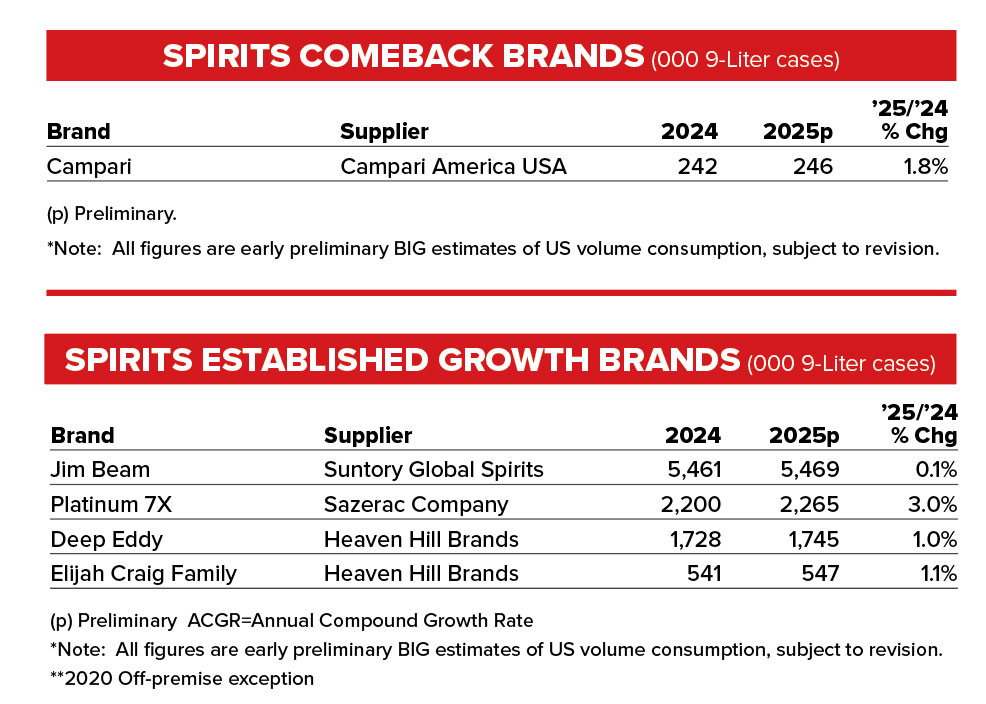
Tres Agaves Tequila, which took home a Fast Track award, acted similarly in 2025 to much success.
“Key trends shaping the business include premiumization within tequila, growing consumer interest in clean-label and organic products, and the continued importance of cocktail culture and experiential discovery, especially on premise,” explains Brie Wohld, VP marketing for Trinchero Family Wine & Spirits, which owns the tequila brand.
“Consumers are increasingly trading up for brands that align with their values, and Tres Agaves is well-positioned as both approachable and premium,” she adds. “Our Agave Nectar, in particular, has seen significant growth as consumers seek natural sugar alternatives.”
A category pioneer that has helped shape the modern premium tequila market, Patrón continues to help define the industry standard. The Bacardi-owned brand garnered a pair of Resilient Brands from its 2025 sales numbers.
“Patrón succeeded over the past year by staying true to who we are, while showing up in culture in bold ways, such as turning a potential crisis into a creative opportunity,” says Roberto Ramirez-Laverde, global SVP, Patrón Tequila. “When we launched our ‘100% Additive-Free” campaign — highlighting that our tequila is made with just three natural ingredients — it sparked pushback from the CRT (Consejo Regulador del Tequila, the regulatory body that oversees tequila production and certification in Mexico), which temporarily evoked Patrón Tequila’s export certificate and halted U.S. imports for four days. Instead of backing down, we responded with our bold ‘Censored Truth’ campaign, using redactions and bleeps to creatively communicate our commitment to transparency while generating curiosity and conversation.”
Social Media Matters
Naturally, those conversations spilled into social media, where consumers increasingly spend most of their time (and money). Here, Patrón leaned into its Censored Truth campaign, as well as a different program centered around a beloved filmmaking celebrity.
“One of the stand out marketing efforts for us is the launch of our new global brand campaign with the debut of The Perfect Pour, a cinematic short film created in collaboration with acclaimed director Guillermo del Toro,” says Ramirez-Laverde. “What we set out to do was build on the momentum of ‘Censored Truth’, but tell our story in a more emotional, cinematic way.”
“At its core, the campaign is built around a very simple idea: a pour of tequila,” he adds. “But for us, that pour is really a metaphor. What Guillermo captured so beautifully is the idea that something which appears effortless on the surface actually requires tremendous care, precision and craftsmanship behind the scenes. That is exactly how we think about Patrón.”
At this point, all alcohol brands spend much time and energy connecting with consumers on social media, seeking out the platforms where they can find and celebrate with their fans.
“Our approach this year was rooted in 360-degree marketing to ensure that Angel’s Envy shows up in culturally relevant ways where our consumers are,” says a spokesperson for the Bacardi-owned brand, which won a Resilient Brand in 2026. “One focus was expanding our brand presence into platforms like Reddit, where we know our audience actively research, discover and engage in authentic conversations around bourbon.”
Agreeing with this sentiment is Wohld of Tres Agaves.
“The brand also saw increased momentum from integrated digital and ecommerce efforts, designed to meet consumers where they are researching and shopping for spirits today,” Wohld says. “Digital discovery and retailer ecommerce platforms are playing a larger role in influencing purchase decisions, making omnichannel execution more important than ever.”
Haku, the Japanese vodka brand from Suntory Global Spirits that won a Resilient Brand award, reports that “consumer interest was driven largely by the expansion of our social footprint, which boosted visibility and engagement,” according to a spokesperson from The House of Suntory.
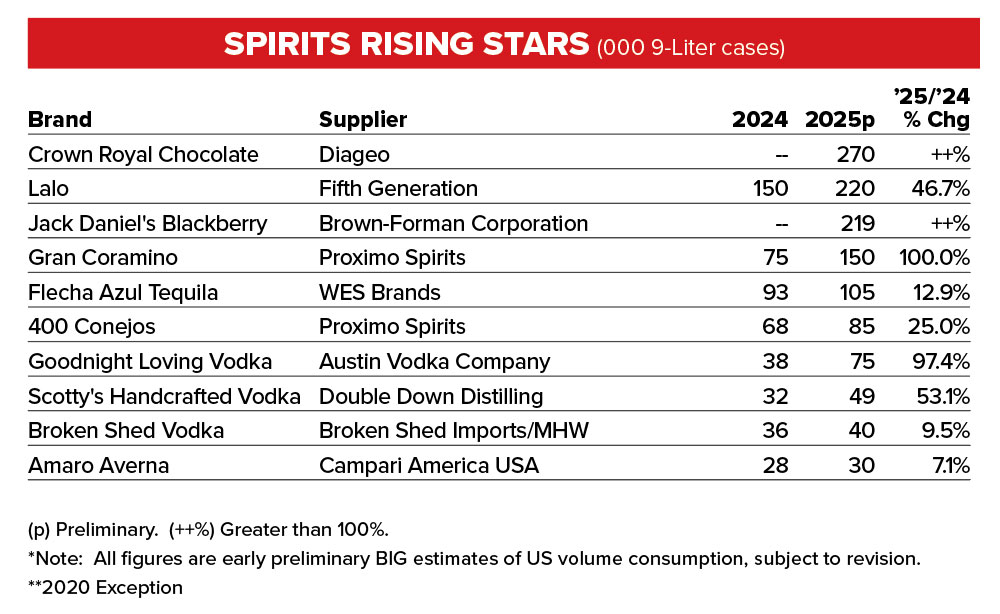
A similar story emerged at Lalo, the Resilient Brand that was recently bought by Fifth Generation, maker of Tito’s Vodka.
“What’s really driven consumer interest is our lifestyle approach,” says Lalo González, co-founder and maestro tequilero. “We’ve never looked at Lalo as just a product to sell; it’s a reflection of how we live and what we love, all while giving a glimpse of modern-day Mexico. That’s always been at the center of how we show up and extends through our marketing.”
“Our social media presence, Lalo’s Instagram for example, is a reflection of the brand,” he adds. “It highlights art, culture, community, celebration and heritage, and showcases the brand in a more editorial way to give people a sense of the world Lalo lives in.”
Experiential Marketing
Tying into the theme of social media’s critical role in modern consumerism is the importance of experiential marketing, which naturally goes hand in hand. People want to share their favorite experiences and cultural moments on social media, so it’s only natural for brands to expand into this arena.
“Patrón continued building its deep roots in music culture,” says Ramirez-Laverde. “Referenced in more than four hundred songs and long associated with celebration, the brand expanded its presence in music through a partnership with Live Nation, launching Hacienda Patrón — a two-level pop-up inspired by the brand’s distillery in Jalisco, Mexico — at major festivals like Lollapalooza, Austin City Limits, and Dreamville. Designed to meet consumers where they’re already celebrating, Hacienda Patrón delivered an immersive, elevated brand experience that brought the spirit of the distillery to life through curated cocktails. Engaging touchpoints, and a vibrant social atmosphere — seamlessly integrating Patrón into the moments that matter most to its audience.”
“That momentum continued with Patrón becoming the Official Tequila Partner of the 66th Annual Grammy Awards, bringing immersive activations and debuting ‘The Golden Record’ as the official cocktail for music’s biggest night,” he adds. “During Grammys Week, the brand hosted a 360-degree Patrón bar at Grammy House, served cocktails at major Recording Academy events like MusiCares Person of the Year and Recording Academy Honors Presented by the Black Music Collective and on the actual award night, backstage winners toasted with Patrón el Alto at the Patrón Reaching New Heights Bar . . . The brand also collaborated with legendary DJ Mustard on social content showcasing how he incorporated the iconic Patrón EL ALTO cork pop and unboxing sounds directly into his beats . . . Ultimately, Patrón succeeded because we did more than participate in culture, we helped shape it.”
Many Growth Brands winners likewise tapped into popular cultural events like festivals and professional sports.
“Tres Agaves leaned heavily into sports, entertainment and cultural sponsorships — including University of Miami Athletics, the New York Rangers, Saratoga Race Course/Belmont Stakes and the Chicago White Sox,” says Wohld. “These programs combined in venue branding, onsite sampling, branded bar placements and local retail tie-ins, driving strong engagement and incremental depletions in key markets.”
Ilegal Mezcal, a Resilient Brand winner owned by Bacardi, has seen its strongest marketing impact come from “immersive, on-the-ground activations that let consumers experience the brand in a memorable, hands-on way,” reports Kaylan Rexer, Ilegal Mezcal’s head of marketing. “These moments go beyond traditional marketing and focus on building real connection, energy and community around the brand.”
“A great example is Bar Ilegal, which has come to life through long-term outposts at venues like Forest Hills Stadium in New York,” she adds. “These spaces bring the brand world to life with a bar, tattoo artist, tastings and other unexpected touchpoints that turn a night out into a full experience.”
By marketing through memorable, social media-friendly experiences and cultural touchstones, alcohol products aim to establish themselves as lifestyle brands.
“From a marketing perspective, we’re continuing to lean into spaces that reflect the Lalo lifestyle,” says González. “This year, that includes expanding further into sports and leisure. We’ve partnered with athletes like Amanda Anisimova, Zizou Bergs and Charley Hull, as well as culturally relevant brands like Malbon. Through events and off-court athlete-driven moments, we’re focused on creating experiences that feel authentic and introduce Lalo to a like-minded community that values quality, ritual and connection.”
“Early on, [co-founder] David and I naturally gravitated toward the art and fashion world because we are both personally passionate about those spaces,” he adds. “We started integrating Lalo into those communities in an authentic way, and we show up at moments like New York Fashion Week and events with Moda Operandi. It’s less about traditional marketing and more about being a part of culture in a way that feels real to us, and I think that’s what people connect with.”
Genuineness and authenticity are both paramount in this form of marketing. For instance, consider the strategies of another Growth Brand winner, Diageo’s Tequila Don Julio, which earned a Fast Track award:
“Our approach is not just about visibility, but about building genuine consumer connection through culturally grounded storytelling and experiences,” says Julian Garcia, VP of tequila, Don Julio Diageo NA. “Over the past year, Tequila Don Julio showed up across key cultural moments spanning music, fashion, sports and film. Cultural tentpoles and holidays like the Oscars, Super Bowl, Fashion Week and Día de Muertos served as an anchor to connect with consumers in meaningful ways through high-impact partnerships, talent collaborations and immersive brand experiences.”
“A standout example is our presence around this year’s Super Bowl in San Francisco, CA,” she adds. “Through the ‘Ready Pa’l Show’ campaign, we tapped into the cultural energy of one of the most vibrant Latino game days in history. Partnering with talent, Druski and Young Miko, we brought Latino traditions to life through social-first storytelling. This was amplified by immersive, on-the-ground experiences, from a kickoff event with a surprise Cardi B performance to a Mission District trolley takeover and taqueria pop-up with Diplo.”
“What’s really driven consumer interest is our lifestyle approach,” says Lalo González, co-founder and maestro tequilero. “We’ve never looked at Lalo as just a product to sell; it’s a reflection of how we live and what we love, all while giving a glimpse of modern-day Mexico. That’s always been at the center of how we show up and extends through our marketing.”
Different Formats
One trend that has taken off in recent time is the rise of alternative formats. Consumers are no longer looking for 750-ml. containers as the only size for their favorite spirits. For a variety of reasons, folks increasingly now buy smaller and larger bottles.
“Our customers and team had been asking for a 375-ml. size,” says Paul Criscuolo, president, Broken Shed Vodka, which won a Rising Star award. “We launched the size in 2025 and so far, it’s been well received.
“Tastings increased velocity and when the brand was met with positive acceptance, and we focused on upselling the customer to the 1.75 L,” he adds.
Reporting similar findings is Código.
“Smaller formats have been a major success for us as consumers continue to explore the category,” says Ibarguen. “They provide an accessible entry point, inviting more people to discover Código for the first time.”
This is a strategy parallelled by many successful brands in 2025. Including Tres Agave, which launched two strategic line extensions in 2025: new 375-ml. Blanco and Reposado formats.
These “aimed at recruiting new consumers, expanding usage occasions and strengthening the brand’s roles in liquor and convenience channels,” Wohld reports.
Elsewhere in the Mexican spirits category, “Ilegal Mezcal is continuing to lean into thoughtful experimentation, with a focus on new size formats and limited releases that speak to a more curious and informed mezcal consumer,” says Rexer. “These innovations are designed to meet people where they are — whether that’s trying the category for the first time or exploring it more deeply.”
This was a common story for Growth Brands winners in 2025:

“We’ve also seen strong momentum with our smaller sized bottles, specifically our 375-ml. format that’s being driven by consumers being more intentional, whether that means managing spend, drinking more mindfully and choosing quality over quantity, or looking for something that fits a specific occasion without committing to a full-size bottle,” says Jay Needham, Global Senior Brand Director for Tequila Cazadores & Agave, which is behind the Fast Track brand.
Consistency in Quality
All the marketing and consumer strategy in the world will not matter, of course, if the product in the bottle is subpar. Quality and consistency remained core components of top brands in 2025.
“At the core of our resilience is our commitment to craftsmanship and authenticity,” says a spokesperson from The House of Suntory about Haku. “We offer a uniquely Japanese perspective on vodka, using 100% Japanese white rice and bamboo charcoal filtration to create a soft, rounded and subtly sweet profile. Haku is produced at Suntory’s Osaka Spirits & Liqueurs Craft Distillery, a site with deep roots in Japanese distillation. Drawing on decades of expertise, our artisans combine traditional Japanese attention to detail with modern distillation techniques. From the careful selection and polishing of the rice to fermentation, distillation, and our signature bamboo charcoal filtration, every step is designed to achieve exceptional purity while preserving delicate character.”
Lalo, like the fellow Austin-born vodka brand that now owns it, grew in popularity through sustaining a single, well-made product.
“At Lalo, everything starts with our 80-proof blanco, it’s our only core expression and it’s the heart of the brand,” says González “We’ve always believed that blanco is one of the most authentic ways to enjoy tequila because it allows the flavor of the agave to shine, and that focus has paid off.”
“We’ve also started introducing limited-edition High Proof releases, which have been successful,” he adds. “The most recent, the 2025 High Proof, stood out in particular because it was our first distilled-to-proof tequila. It comes straight from the still with no water added after distillation, resulting in an expression that captures the aromas and flavors of our distillery in their most authentic form.”
Consistency and quality have helped drive the modern Mexican spirits boom, as superbly made products have helped erase old, outdated consumer misconceptions about the nature of the category.
“Ilegal Mezcal has continued to thrive over the past year by proving that scale and integrity don’t have to be mutually exclusive,” Rexer says. “The brand has expanded meaningfully while staying true to its roots — its artisanal production methods, its commitment to social impact and its dedication to honoring and preserving the rich heritage behind mezcal.”
“Rather than chasing growth at any cost, Ilegal has stayed focused on doing things the right way, and that consistency has paid off,” Rexer adds.
Likewise for Don Julio.
“Founded by Don Julio González, who helped pioneer many of the standards that define modern tequila, the brand has long been synonymous with quality,” says Garcia. “Notably, Tequila Don Julio was among the first to age reposado longer than industry standards, making it a cornerstone of both our history and trademark profile.”
“Today, that legacy continues to drive performance,” she adds. “As consumers trade up within tequila and as aged spirits drinkers from categories like whiskey and Cognac enter the space, Tequila Don Julio 1942 and Reposado remain a standout in our portfolio. Its balance of approachability and complexity makes it a natural bridge into aged tequila.”
Flavors Attract Attention
Among the more cited, positive trends among Gen Z consumers is their taste for flavorful products. Younger generations, in general, seem to gravitate towards products that offer more flavor.
“What truly sets Código apart is its approach to aging. Each aged expression rests exclusively in Napa Valley cabernet barrels, a distinctive choice that delivers incredible liquid while deepening the story behind it,” says Ibarguen. As a result, products like our Reposado tequila deliver something to consumers that’s premium, a little unexpected, and worth sharing.”
This trend has seen the vodka category come full circle back to flavors, after the damaging oversaturation in past years hurt sales. Now, flavors are back in, especially when done thoughtfully (as opposed to confectionary).
“We saw strong momentum from the launch of Haku Yuzu Flavored Vodka in fall 2025,” says a spokesperson from The House of Suntory. “The bright citrus of yuzu paired with our smooth rice vodka opened new opportunities in the flavored vodka segment, inviting consumers to experience Japanese flavor and craftsmanship in a new way.”
“The release builds on Haku’s Japanese identity by incorporating one of the country’s most beloved citrus fruits, offering a bright, aromatic flavor that works seamlessly in cocktails,” the spokesperson continues. “This launch coincided with the growing consumer interest in Japanese flavors, especially in cocktails.”
Other brands have reported rising consumer interest in specific flavors and premium products.
While we’re not able to share specific sales figures, Reposado was a key growth driver for us,” says Needham of Cazadores. “That reflects a broader shift we’re seeing in the category overall, where consumers are increasingly willing to invest in higher-quality expressions and are gravitating toward more premium profiles, particularly within aged tequilas.”
What’s Next?
What will drive growth in spirits in 2026 and beyond, as the industry continues to grapple with a worldwide pullback? Times of industrywide transition often see mergers and acquisitions.
“As we look to the next few years, we see a great opportunity to grow our portfolio through acquisition and partnerships that compliment our portfolio strategically,” says Dunne, of The Lucas Bols Company. “We have invested significantly in the last 18 months to expand and improve our team’s capabilities. That has set the table for us to look towards the next stage of growth for our company. We believe there are vibrant cocktail brands out there looking for the right partner to unlock their potential in a very complex market like the United States. As a global cocktail company, we can take successes from around the world and apply those learnings in a strategic and thoughtful manner in the U.S. We also have an ambitious pipeline of innovation that we will be introducing in the mid-term.”
Products that won Growth Brands despite industry headwinds will continue to focus on what was working.
“What we’re doing is working, so now our focus is to scale it,” says Ibarguen, of Código. “We’re leaning into the standout quality of the liquid and showing up where discovery happens: on cocktail menus, in top tequila bars and restaurants, at events, through tastings, and across digital and social. However someone comes across Código, the goal is the same: to create that first sip moment that keeps them coming back.”
Perhaps the most cited argument for optimism amidst this challenging period is the excellent point that the alcohol industry has been around or many, many years. These are brands with real history behind them, momentum that suggests sunnier times are ahead once more.
“2026 marks the 20-year anniversary of Ilegal, and that milestone will guide everything we do,” says Rexer. “This isn’t about a single campaign — it’s about celebrating the brand’s past, present, and future in a way that feels true.”
“Our Bar Ilegal program — which serves as the experiential outpost inspired by Café No Sé, where the brand was born — will tour across the country in major cities,” she adds. “Bar Ilegal is where the brand comes fully to life: live music, tattoo artists, across-the-bar education and real community moments. It’s not a pop-up for the sake of it — it’s storytelling you can step into.”
Innovation will also remain a crucial component of Growth Brands winners as they prepare for the upcoming years.
Looking ahead, Patrón is focused on “continuing to educate around our deep-rooted craftsmanship while deepening our connection with the bartending community,” says Ramirez-Laverde. “A big part of that is the launch of Patrón 100, which is a really important innovation for us.”
“It’s our first distilled-to-proof tequila, bottled at 100 proof and produced entirely using 100% traditional tahona methods,” he adds. “What that means is we’re bringing the tequila to proof without dilution, allowing the full expression of the agave to come through more depth, more structure and more intensity while still maintaining the balance.”
And the trend of leaning into major cultural events will continue.
“Tequila Don Julio is showing up around the FIFA World Cup 2026 as an Official Supporter with the launch of a limited-edition Tequila Don Julio 1942 FIFA World Cup 2026 bottle,” Garcia says. “The campaign will continue to roll out across key moments, with NYC-based activations and experiences planned as the tournament approaches, bringing the spirit of global celebration to one of its most iconic host cities.”
This is a common goal for many Growth Brands winners as they look ahead to 2026 and beyond.
“We’re focused on building on the momentum we’ve created by continuing to show up in culture in ways that feel authentic to Cazadores,” says Needham. “That includes leaning into key cultural moments like fútbol this summer, while also activating around authentic Mexican cultural moments such as Fiestas Patrias, Día de Muertos and Las Posadas, where we can connect with consumers through celebration, heritage and shared cultural pride. We’ll also continue to expand our Mercadito platform to bring the brand to life at festivals and culinary events through immersive, community-driven moments that highlight our heritage and cocktail culture.”
Despite economic headwinds, shifting consumer behavior and increased competition, the 2025 Growth Brands winners demonstrate that success in today’s spirits marketplace is still achievable. By embracing modern tastes, investing in experiential and digital marketing, offering new formats, maintaining quality and innovating with flavor, these brands found ways to connect with consumers in meaningful ways.
As the industry continues to evolve, the companies that remain agile, authentic and consumer-focused will be best positioned for growth. If 2025 proved anything, it’s that even in a challenging environment, opportunity still exists for brands willing to adapt — and this year’s Growth Brands winners have led the way forward.
Feature photo by Thomas Park on Unsplash.
Kyle Swartz is editor of Beverage Dynamics. Reach him at kswartz@epgacceleration.com. Read his recent piece, How to Attract Gen Z to Alcohol.
The post Our 2026 Spirits Growth Brands Awards Winners appeared first on Beverage Information Group.