
Our 2026 Ready-to-Drink Growth Brands Awards Winners
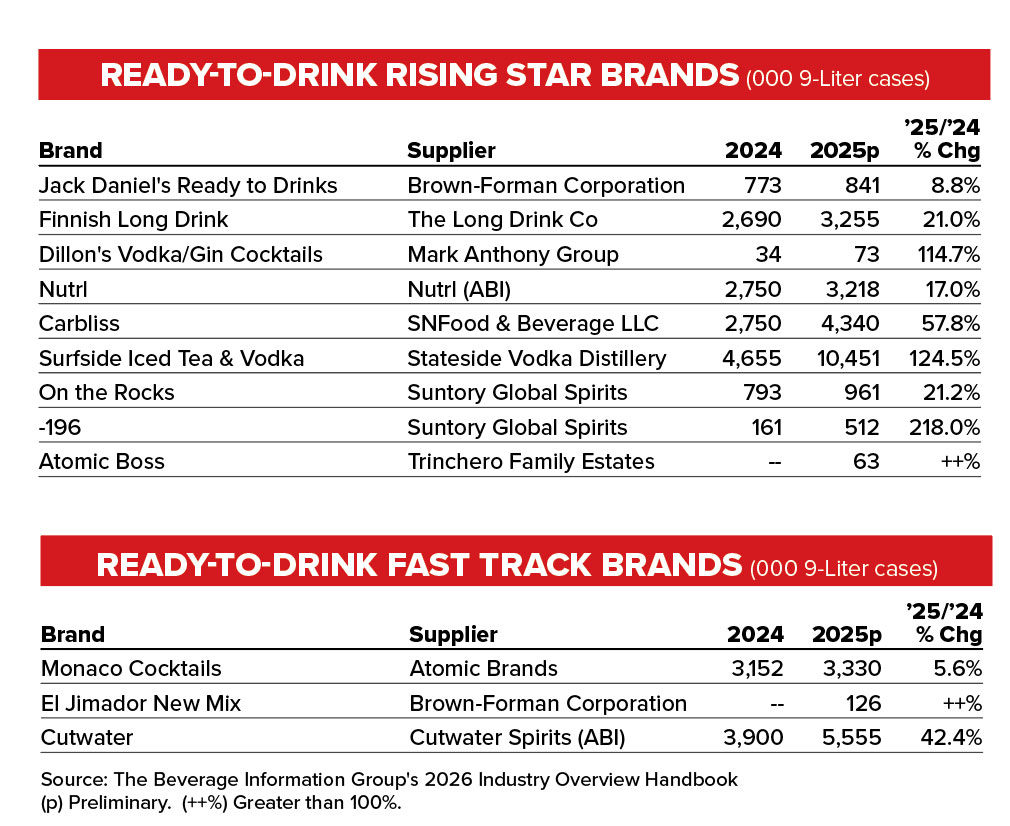
The ready-to-drink (RTD) beverage category, which was up nearly 18% in 2025, has firmly established itself as the growth engine of the total U.S. spirits market. RTDs last year even overtook the long-time leading vodka segment to become the clear leader, according to the 2026 Industry Overview published by The Beverage Information Group.
What’s more, RTDs was one of two categories, with tequila, to succeed in generating any consumption growth in 2025. And without the impressive growth of the RTD segment in 2025, the overall spirits category would have decreased about 3% instead of posting a 1.6% increase.
The major industry acquisitions involving RTD brands in recent years further underscore the power of the category. For instance, Anheuser-Busch purchased Cutwater in 2019, three years before launching NÜTRL Vodka Seltzer in the U.S. Suntory Global Spirits (then Beam Suntory) bought On the Rocks in 2020, and Sazerac acquired BuzzBallz in 2024.
So far this year Molson Coors announced in March it is buying Atomic Brands, the maker of the Fast Track winner Monaco Cocktails RTD. Mark Anthony Group, the creator of White Claw Hard Seltzer, in April acquired Rising Star The Finnish Long Drink.
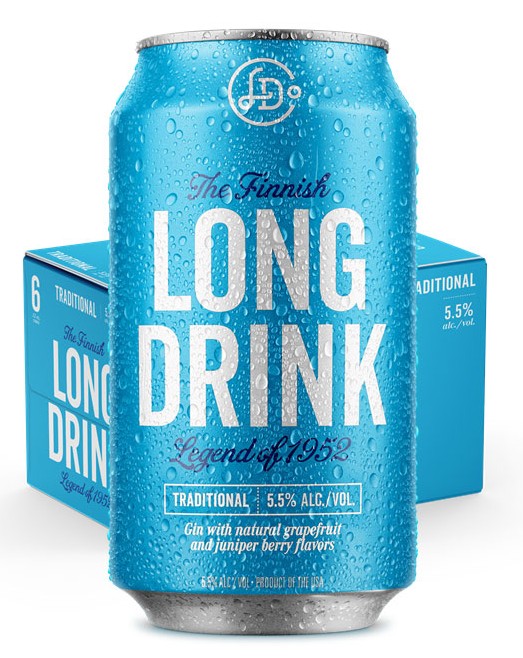
Finland’s signature Long Drink beverage, made with gin, grapefruit and soda, became one of the world’s first RTD cocktails when it was created for the 1952 Helsinki Olympics to meet the demand for pre-made drinks. The Finnish Long Drink canned RTD launched here in 2018 and has attracted numerous super fans, including co-owner and actor Miles Teller. It’s also grown steadily, reaching 3.3 million cases in 2025.
Eyes on Innovation
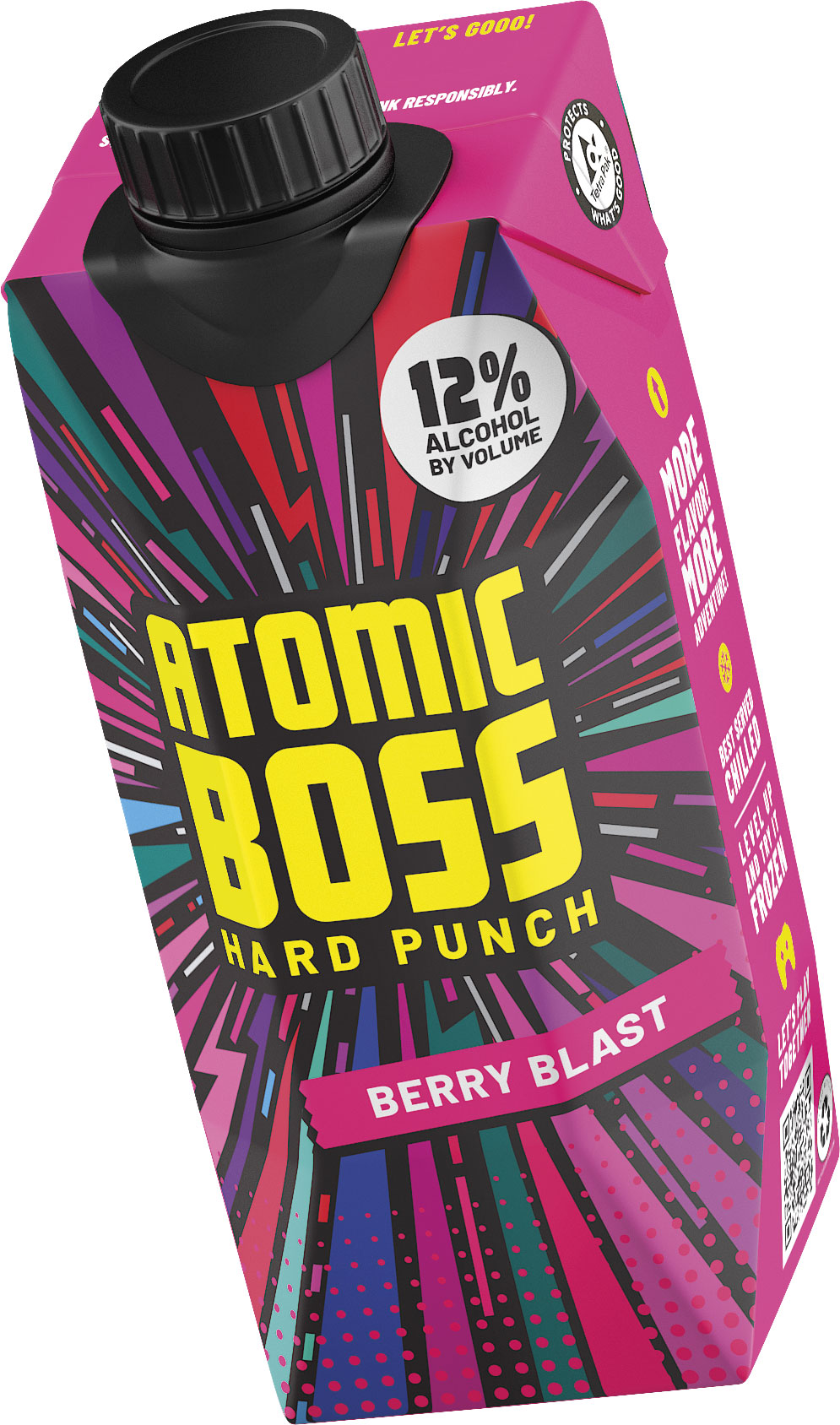
The RTD category’s continued surge has created a rising tide for brands positioned correctly, says Brie Wohld, vice president of marketing for Trinchero Family Wine & Spirits, which launched the Atomic Boss RTD in 2024. Atomic Boss, a Rising Star winner, “benefits from this momentum while offering differentiation in a category still dominated by just two major players, leaving ample room for new flavors and brands that bring freshness and variety,” she says.
Just as important is the brand’s resonance with Gen Z and Millennial legal drinking age consumers, Wohld adds. “These shoppers gravitate toward bold, trend-forward beverages that fit spontaneous, on-the-go occasions. Their strong preference for convenience stores — where alcohol is typically consumed shortly after purchase — further favors Atomic Boss’s single-serve, portable, chilled-and-ready format.”
Innovation has been driving consumer interest and sales this year, says Jessica Rives, senior brand manager for Jack Daniel’s Spirit-Based RTDs & Partnership. “The launch of our variety pack, including Jack & Coke, Jack & Coke Cherry, and Jack & Coke Vanilla, has been instrumental in our growth. Earlier this year, we introduced a larger-format 16-oz. offering that has opened new outlets for us in cold boxes and on-premise locations across the country.”
In April the company launched a Zero Sugar variety pack featuring Jack & Coke, Jack & Coke Cherry Zero Sugar, and Jack & Coke Vanilla Zero Sugar. “We have expanded into new outlets in convenience and grocery, and are finding new ways for consumers to experience Jack & Coke in bars and at tailgates,” Rives says.
Innovation remains a key growth driver for RTDs, agrees Clement Pappas, co-founder/CEO of Stateside Brands, which produces the Surfside RTD. A package innovation for the brand was launching 19.2-oz. cans across the top-selling Surfside flavors. “This SKU size is the perfect fit for C-store and venue business and provides an attractive price point for consumers,” he says.
Suntory Global Spirits brand -196 vodka seltzer (pronounced “minus one-nine-six”) increased a whopping 218% in its first year bringing the beverage to the U.S. market from Japan. The RTD, which became available nationwide last spring, uses a proprietary Freeze, Crush, Infuse (FCI) method, in which whole fruits are flash-frozen in liquid nitrogen at exactly -196°C, crushed, and then blended into premium vodka. It launched a Zero Sugar Lemon expression this past August.
Flavor Savor
Flavor is the top factor influencing RTD purchases, according to research firm Mintel’s report on RTD Alcoholic Beverages-US 2025, and ranks high in consumer interest for innovation.
“Unlike beer and wine, which have limited flexibility, RTDs, often made with neutral spirits/bases which offer greater versatility to fully explore bold and unique flavor profiles,” the report says. “These beverages don’t need to mimic traditional cocktails, giving brands the freedom to experiment and innovate with new and exciting flavors.”
This past April, -196 Vodka Seltzer launched a Combo Crush Variety Pack for summer. The pack features four new flavors with a unique layered twist: Yuzu & Lemon, Grapefruit & Cherry, Strawberry & Kiwi, and Peach & Mango.
NÜTRL in March announced the launch of its newest flavors: Blueberry and Peach. Surfside’s innovation pipeline projects in 2025 have led to new flavors releases in 2026, including a Blueberry Lemonade 4-pack and Half & Half Variety 8-pack, Pappas says.
Stateside Brands also launched Super Lyte last month – a new RTD brand in the “hard ade” category. “Super Lyte is inspired by classic sports drink flavors at 4.5% ABV, only 90 calories, zero sugar and zero bubbles,” says Pappas. “The launch of Super Lyte is a major step for us as we build on the trust and success we have achieved with Surfside across our partners, retailers, bars, restaurants and fan base to become a bonafide U.S. alcohol beverage supplier.”
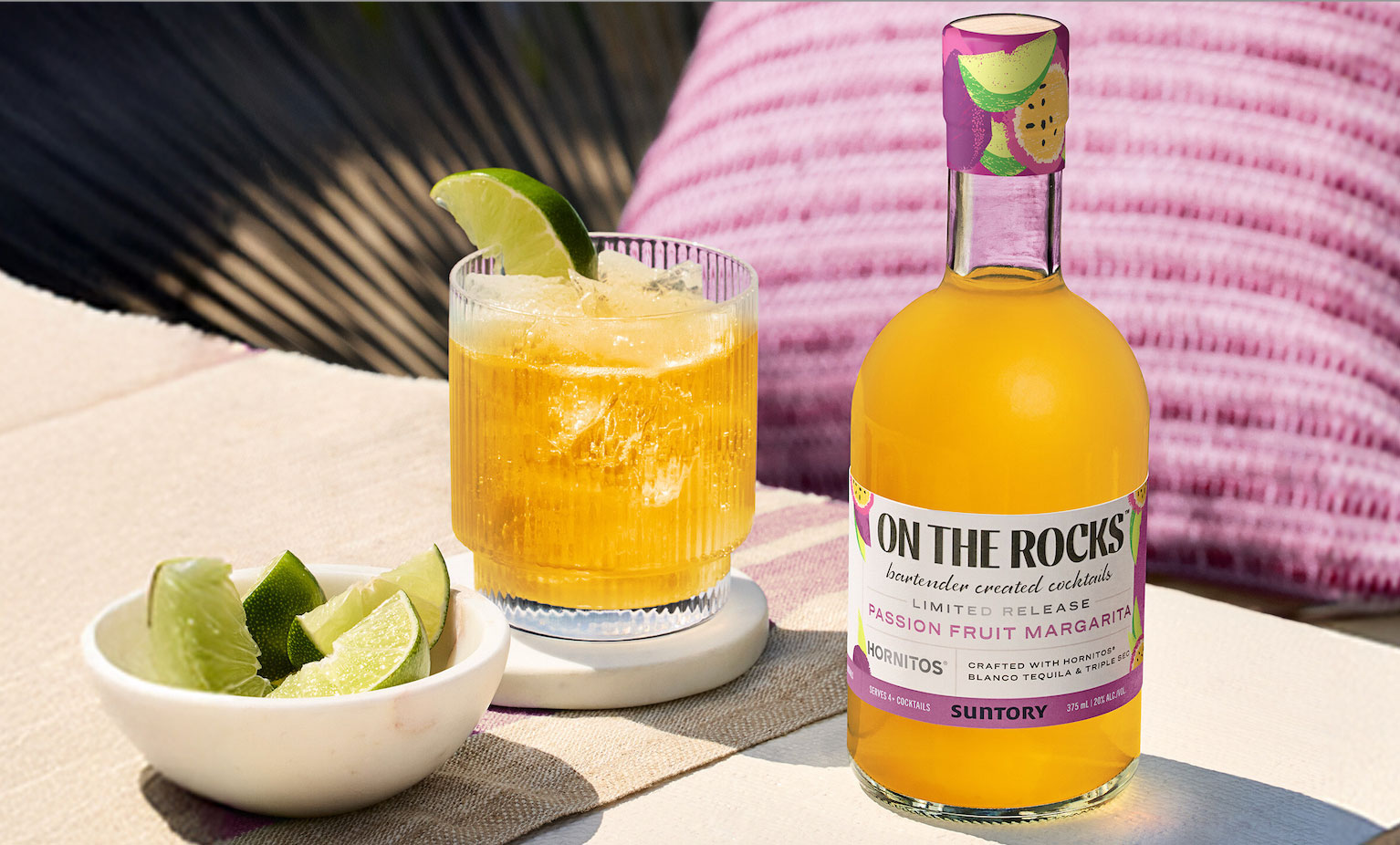
On The Rocks in May 2025 introduced On The Rocks Sparkling Cans, carbonated cocktails available in Sparkling Lime Margarita, Mango & Mint Mojito and Cucumber & Lemongrass Mule. The brand in February expanded its permanent lineup with a new Whiskey Sour, made with Jim Beam bourbon and created by On The Rocks Global Brand Ambassador and expert mixologist Joaquín Simó. And in April it expanded its Margarita portfolio with a limited-edition Passion fruit Margarita and a permanent Sparkling Watermelon Margarita.
Good Sports
Sporting events and RTDs go together, as these canned beverages have replaced beer for many spectators. For instance, Jack Daniel’s is “looking to take a significant stance this fall with a 360° activation centered around football,” Rives says.
NÜTRL Vodka Seltzer, the official hard seltzer sponsor of FIFA World Cup 2026, in February unveiled a FIFA World Cup 2026 sweepstakes. Fans can spin the digital NÜTRL wheel daily for a chance to win prizes. Everyone who plays will be entered for the chance to win the grand prize: tickets to the FIFA World Cup 2026 final, with flights, hotel accommodations and additional VIP experiences.
Anheuser-Busch and the MSG Family of Companies in January announced an expanded, multi-year sponsorship that showcases the company as an Official Sponsor across the MSG’s portfolio of sports and entertainment assets. In particular, NÜTRL Vodka Seltzer and Cutwater will be promoted, alongside Michelob ULTRA beer, at MSG venues such as Madison Square Garden.
For Surfside, “Our sports partnerships have been a major catalyst of driving our brand building and increasing our brand awareness, trial and growth,” says Pappas. “In 2025, Surfside engaged in strategic sports partnerships with the MLB, MiLB, NHL, MBA, MLS and universities to reach 50-plus teams across the country. The strategy began authentically on our home turf, with the Philadelphia Phillies at Citizens Bank Park, and has scaled significantly since.”
The company in 2025 released co-branded Surfside cans and packaging with MLB partners, the Los Angeles Dodgers and San Francisco Giants, he says. “We have now expanded to additional teams for 2026 across the country.”
Surfside is keeping a close eye on trends within occasion-based opportunities, particularly within sports and golf verticals, says Pappas. “Our new Half & Half Variety 8-pack taps directly into the golf consumer, which continues to be a strong and popular occasion for enjoying RTD beverages.”
It also doesn’t hurt that South Philadelphia’s premier entertainment venue, formerly known as Xfinity Live!, was renamed Stateside Live! this past year. “This was a major milestone for our company cementing our place as a cultural mainstay within the local Philadelphia community,” says Pappas.
In addition to Atomic Boss’s focused trade promotions to gain brand awareness, the RTD brand has a variety of programs in place to drive consumer trial and build brand awareness, says Trinchero’s Wohld. These include a multi-season sponsorship with the University of Miami Athletics as the Official Hard Punch.
“Atomic Boss’s bright, colorful merchandising is inspired by geek culture — where people unite in creative expression and shared passions for technology, entertainment, fiction and fandom,” she notes. “Reinforcing the brand’s personality and relevance with younger consumers helped us secure custom floor racks and incremental placements beyond standard shelf space, improving visibility and driving impulse trial.”
Keeping up the Momentum
As popular as RTDs have become, the category’s growth is expected to slow significantly in the next year according to The Beverage Information Group projections. And as competition and consolidation continue, it won’t be easy for brands to stand out. How will some of the fast growers continue their momentum?
Beyond product innovation, NÜTRL focuses on in-person engagement at major music festivals like Ultra, Lollapalooza, The Governors Ball and CMA Festival to connect with consumers in high-impact settings. The brand has further expanded its music strategy through a partnership with rising country artist Tucker Wetmore, serving as an official sponsor of his 2025 tour and continuing the collaboration into 2026 with support for his debut solo tour, The Brunette World Tour.
Surfside will continue to drive growth and connect with fans through strategic sports partnerships with the MLB, NHL, NBA and NCAA teams across the country, Pappas says. “We also continue to drive authentic lifestyle partnerships with musicians and festivals across the country. We are meeting fans where they are so we can be a part of all their celebratory moments. “
Additionally, “we have built strategic Hispanic marketing initiatives to test new messaging along with specific tactics to broaden our reach in the Hispanic community,” says Pappas. “We will begin initiating in key markets in 2026.”
As a young brand, Atomic Boss’ near-term focus is expanding distribution across its four flavors: Berry Blast, Tropical Fusion, POG! (Passion Fruit, Orange, Guava), and Blue Rizz, says Wohld. “We’re particularly focused on convenience stores, where shoppers gravitate toward bold, trend-forward beverages for spontaneous, on-the-go occasions.”
The rise of RTD cocktails, flavored beverages and single-serve packaging is helping grow Atomic Boss with its younger legal drinking aged consumer audience, she adds. “We’re all facing the challenges of retailer consolidation and competitive pricing among flavorful, value-focused brands, but we’re confident that we have a unique offering with Atomic Boss.”
For years, Pappas says, “Consumers have been looking for a true alternative to beer: a delicious, flavor-forward, low calorie, low-ABV, non-carbonated, spirit-based iced tea and lemonade offering in the convenience of a can.” Options were limited to malt-based products and hard seltzers due to regulatory and tax considerations, which created barriers for spirit-based products, he notes.
“Now, with the emergence of vodka-based canned cocktails like Surfside, the category has fundamentally shifted,” he adds, “and there is no turning back.”
Melissa Dowling is editor of Cheers magazine, our on-premise sister publication. Contact her at mdowling@epgacceleration.com. Read her recent piece: Our 2026 Wine Growth Brands Awards Winners.
The post Our 2026 Ready-to-Drink Growth Brands Awards Winners appeared first on Beverage Information Group.